
Skip to content
Picasso Art
  • Vibe CodingExpand
    • What is Vibe Coding
    • Clean Code Importance
Picasso Art
  • Overhead view of a minimalist table setting with a single plate, precisely spaced cutlery, and one small decorative sprig, illustrating hospitality through composition
    Food and Menus

    The Well-Set Table: Hospitality as Composition

    ByTheArtist October 30, 2026October 16, 2026

    The Well-Set Table: Hospitality as Composition Before a single dish arrives, the table has already spoken. The spacing between the fork and the plate, the angle of the knife, the empty space left deliberately bare — all of it communicates something to the guest before they’ve said a word or tasted anything. A well-set table…
    Read More The Well-Set Table: Hospitality as CompositionContinue

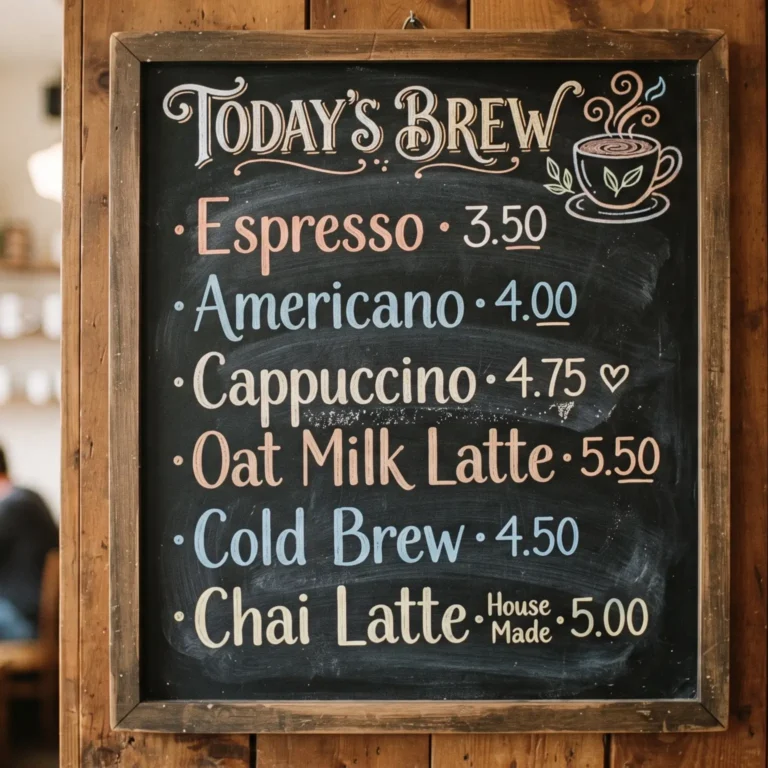
  • Close-up of a coffee shop chalkboard menu with hand-lettered specials and a doodled coffee cup, illustrating handwriting as brand voice
    Food and Menus

    Coffee Shop Chalkboard: Handwriting as Brand Voice

    ByTheArtist October 29, 2026October 16, 2026

    Coffee Shop Chalkboard: Handwriting as Brand Voice Walk past two coffee shops. One has a printed menu board — vector font, perfectly kerned, backlit. The other has a chalkboard with slightly uneven letters, a coffee cup doodled in the corner, today’s special underlined twice. You will trust the second one more before you’ve tasted either…

    Read More Coffee Shop Chalkboard: Handwriting as Brand VoiceContinue

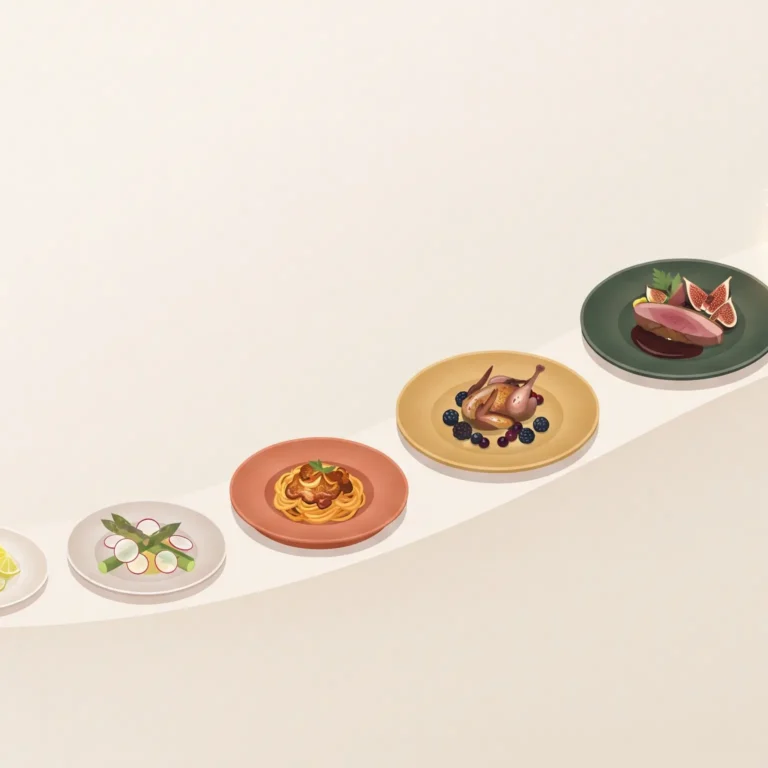
  • Illustration of a sequence of plated dishes increasing in complexity from left to right, representing a tasting menu structured like a story in courses
    Food and Menus

    Tasting Menu: Storytelling in Courses

    ByTheArtist October 28, 2026October 16, 2026

    Tasting Menu: Storytelling in Courses A tasting menu is rarely described as “a story” by the people eating it. But that’s exactly what it is — a narrative with a beginning, a rising middle, a climax, and a resolution, except the sentences are plates and the reader is chewing instead of reading. Change the order…

    Read More Tasting Menu: Storytelling in CoursesContinue

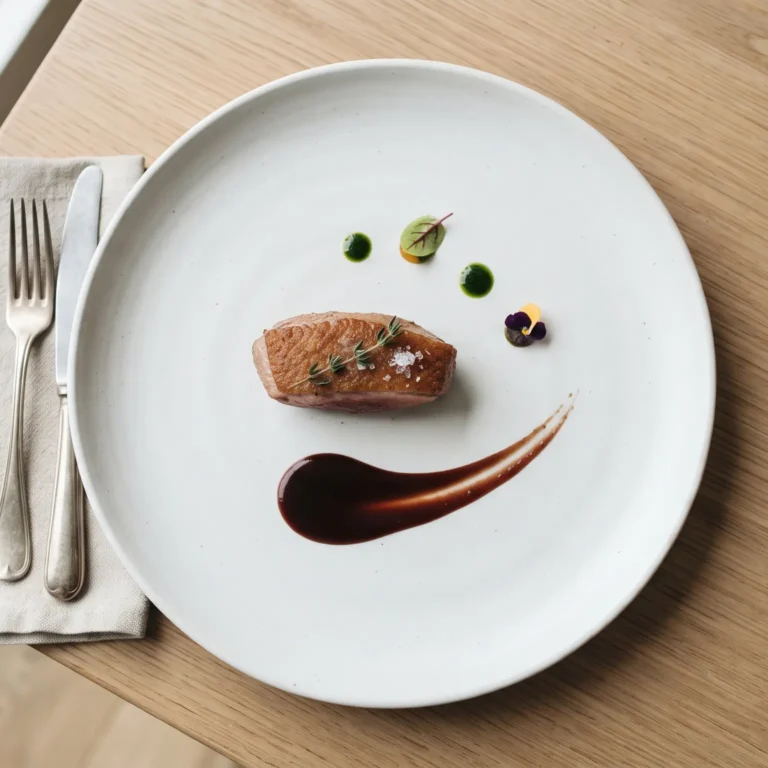
  • Overhead photo of a minimalist plated dish with a single sauce swipe and generous white space, illustrating food plating as visual composition
    Food and Menus

    Food Plating: Painting With Ingredients

    ByTheArtist October 27, 2026October 16, 2026

    Food Plating: Painting With Ingredients A plate of food is read before it’s tasted. The eye moves across it the way it moves across a painting — scanning for balance, color, and focal point — and forms a verdict long before the fork arrives. This is why food plating isn’t garnish. It’s composition. A chef…

    Read More Food Plating: Painting With IngredientsContinue

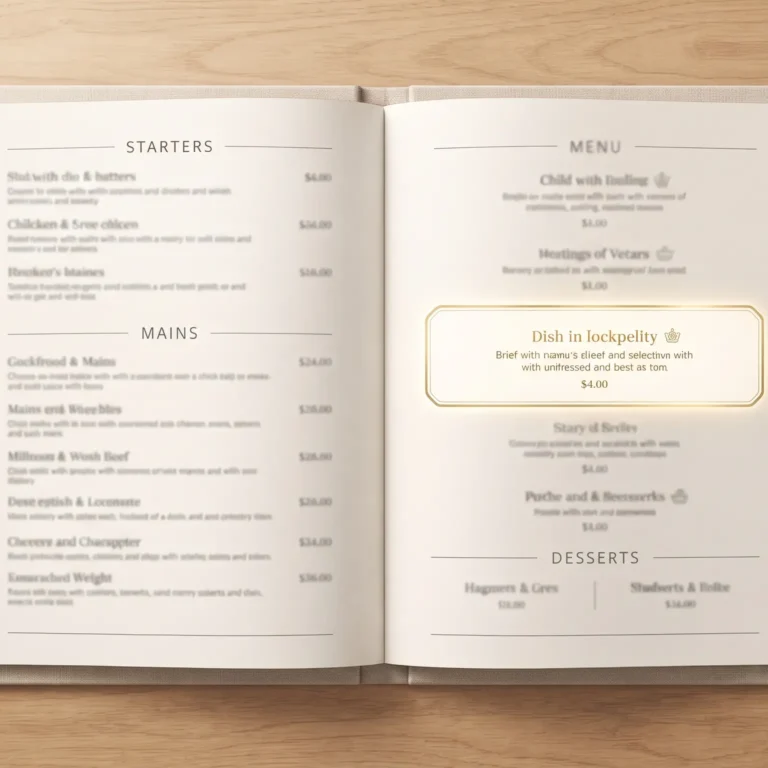
  • Illustration of an open restaurant menu with one dish highlighted in gold light, representing how menu design guides diners toward specific choices
    Food and Menus

    Restaurant Menu Design: Choosing What You Order Before You Order It

    ByTheArtist October 26, 2026October 16, 2026

    Restaurant Menu Design: Choosing What You Order Before You Order It You think you’re choosing your dinner. Most of the time, the menu already chose for you. Before a single word is read closely, your eye has already been guided toward one dish — through placement, price anchoring, box borders, and the gap of white…

    Read More Restaurant Menu Design: Choosing What You Order Before You Order ItContinue

  • Illustration of a mostly blank page with sparse lines of text and large areas of empty space, representing the role of white space in writing
    Blogging

    White Space in Writing: What the Gaps Say

    ByTheArtist October 25, 2026October 16, 2026

    White Space in Writing: What the Gaps Say Most writers obsess over what goes on the page. Few think about what’s deliberately left off it. But the gaps — the line breaks, the short paragraphs, the pause before a sentence lands — are doing as much work as the words themselves. White space isn’t the…

    Read More White Space in Writing: What the Gaps SayContinue

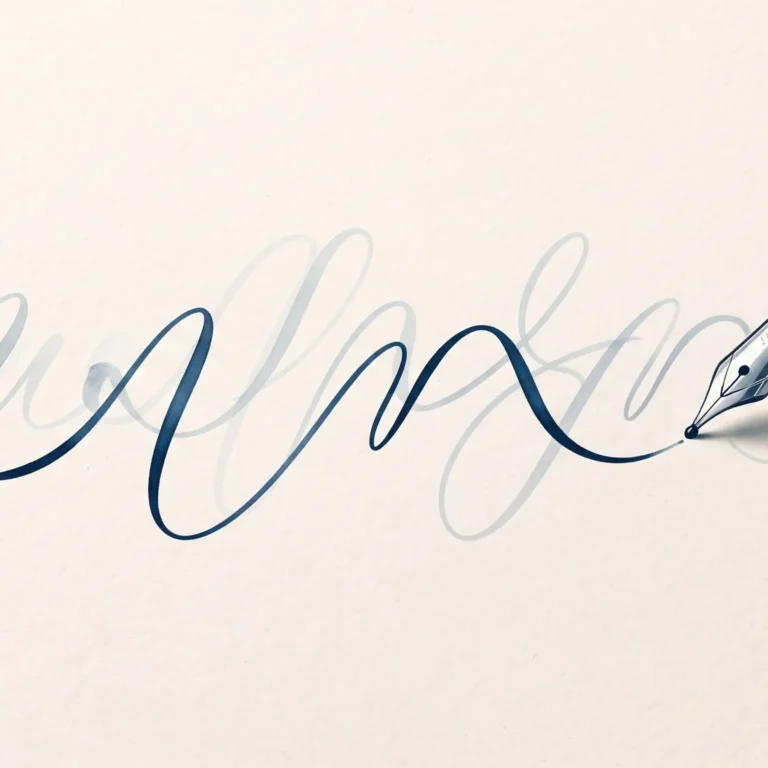
  • Illustration of a pen drawing a flowing signature-like line with faint repeated patterns behind it, representing how a writer builds a consistent, recognizable voice over time
    Blogging

    Byline: Building a Voice People Recognize

    ByTheArtist October 24, 2026October 16, 2026

    Byline: Building a Voice People Recognize There’s a specific test for whether a writer has a voice: cover the byline, and see if readers can still guess who wrote it. Most writing fails this test. It’s competent, correct, and interchangeable — it could have been written by anyone, which means it’s remembered by no one….

    Read More Byline: Building a Voice People RecognizeContinue

  • llustration of a single warm, personal letter standing out from a background of identical grey envelopes,
    Blogging

    Newsletter: Writing Like You’re Talking to One Person

    ByTheArtist October 23, 2026October 23, 2026

    Newsletter: Writing Like You’re Talking to One Person Open any newsletter that makes you feel something, and you’ll notice the same trick at work: it doesn’t read like it was sent to 40,000 people. It reads like it was written to you, specifically, at your kitchen table. That illusion isn’t an accident of style. It’s…

    Read More Newsletter: Writing Like You’re Talking to One PersonContinue

  • Illustration of a page with most text crossed out and only a few key lines remaining, representing editing as a subtractive creative process
    Blogging

    Blog and Articles Editing: Subtraction as a Creative Act

    ByTheArtist October 22, 2026October 11, 2026

    Blog and Articles Editing: Subtraction as a Creative Act Most people think editing means improving what’s there. It doesn’t. Editing means removing what shouldn’t be. A first draft is rarely wrong in what it says — it’s wrong in how much of it is saying nothing at all. The editor’s real job isn’t to add…

    Read More Blog and Articles Editing: Subtraction as a Creative ActContinue

  • Illustration of a note card with six connected dots leading to a handshake icon, representing a headline as a short promise that earns trust
    Blogging

    A Promise in Six Words

    ByTheArtist October 21, 2026October 11, 2026

    A Promise in Six Words Six words. That’s roughly all you get before a reader decides whether the rest of your sentence exists for them. A headline isn’t a label stuck on top of an article — it’s a contract. And like any contract, it’s judged not by how clever it sounds, but by whether…

    Read More A Promise in Six WordsContinue

Page navigation

1 2 3 4 Next PageNext
  • Vibe Coding
    • What is Vibe Coding
    • Clean Code Importance