Tasting Menu: Storytelling in Courses
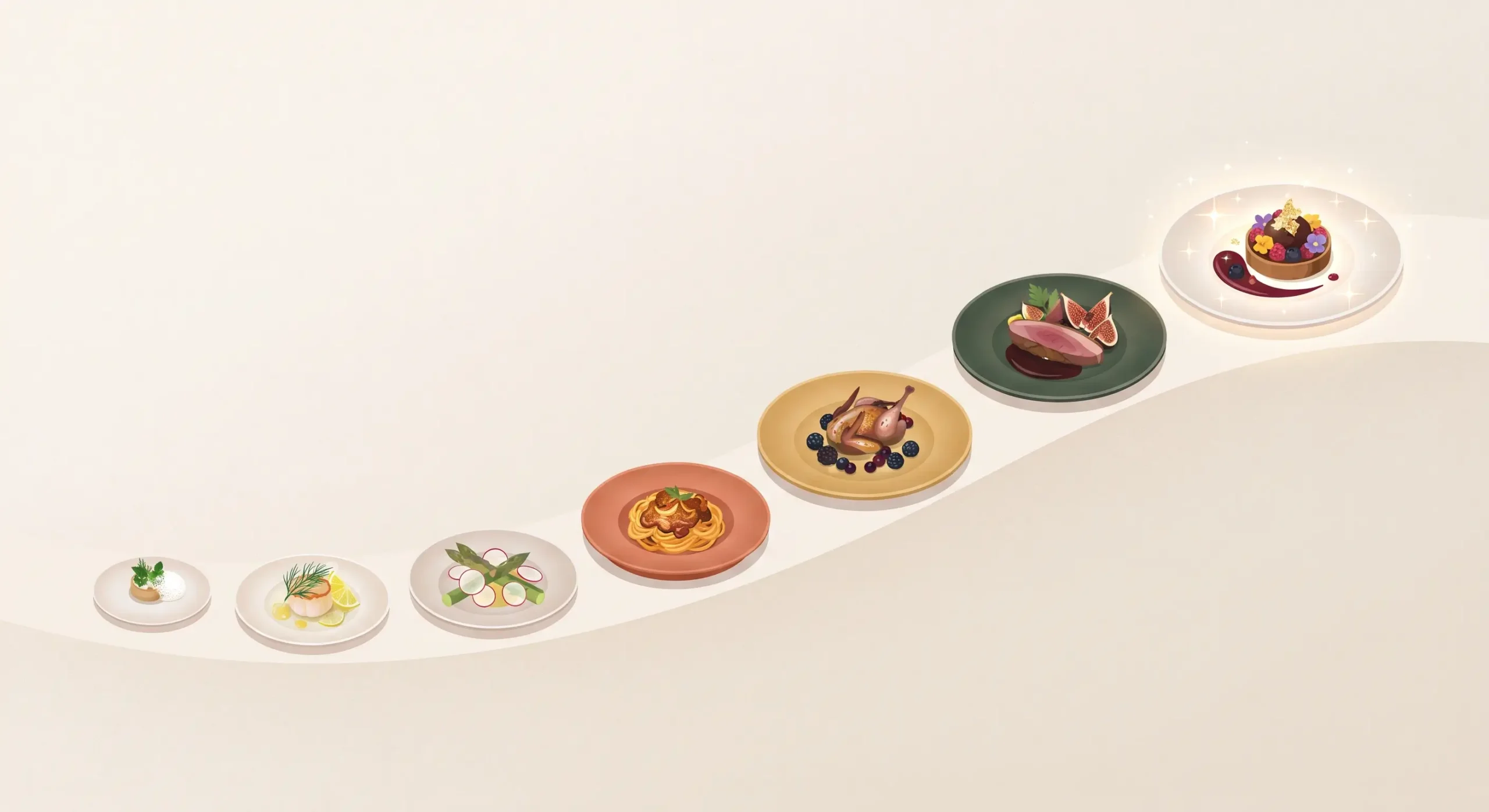
A tasting menu is rarely described as “a story” by the people eating it. But that’s exactly what it is — a narrative with a beginning, a rising middle, a climax, and a resolution, except the sentences are plates and the reader is chewing instead of reading. Change the order of the courses and you change the story, even if every single dish stays identical.
This is the same principle that governs good writing, good design, and good conversation: sequence carries meaning independent of content. A tasting menu is just the most literal, edible version of that idea.
What Makes a Tasting Menu Feel Like a Story?
A tasting menu reads as a story when its courses follow a narrative arc — a light, intriguing opener; a rising sequence of increasing intensity and complexity; a climactic main course; and a resolving dessert that releases tension rather than adding to it. The structure matters as much as any individual dish, the same way a headline sets up a promise the rest of the piece has to pay off.
The Opening Course Is the First Sentence
The opening course of a tasting menu does the same job as the first sentence of a blog post: it has to earn the next bite the same way a first line earns the second one. It’s rarely the most complex dish on the menu. It’s the most inviting one — small, bright, slightly unexpected, designed to make the diner lean in rather than brace for a heavy meal ahead.
A chef who opens with the richest, heaviest dish on the menu has made the same mistake as a writer who opens with their densest paragraph: there’s nowhere left to build, and the reader (or diner) is exhausted before the real story begins.
Pacing: Why Course Order Is Not Arbitrary
Each course in a well-built tasting menu exists in relationship to the ones beside it — lighter before heavier, acidic before rich, simple before complex. This pacing is a kind of editing by subtraction, the same discipline behind cutting a blog post down to its essentials: a chef doesn’t ask “what else can I add to this course,” they ask “what does this course need to not include so the next one lands harder.”
Too many standout dishes back-to-back and the diner can’t tell which moment mattered. The same is true of writing dense with too many ideas per paragraph — nothing gets to breathe, so nothing gets remembered.
White Space on the Plate
Between courses, there’s a pause — the clearing of a plate, a sip of water, a palate cleanser, a few seconds of nothing. That pause is doing real work. It functions exactly like white space in writing: the silence between courses isn’t empty, it’s where the previous bite settles and the next one gets anticipated. A tasting menu with no pacing gaps — course after course with no breathing room — reads like a wall of text with no paragraph breaks. Technically complete, but exhausting to get through.
Plating as Punctuation
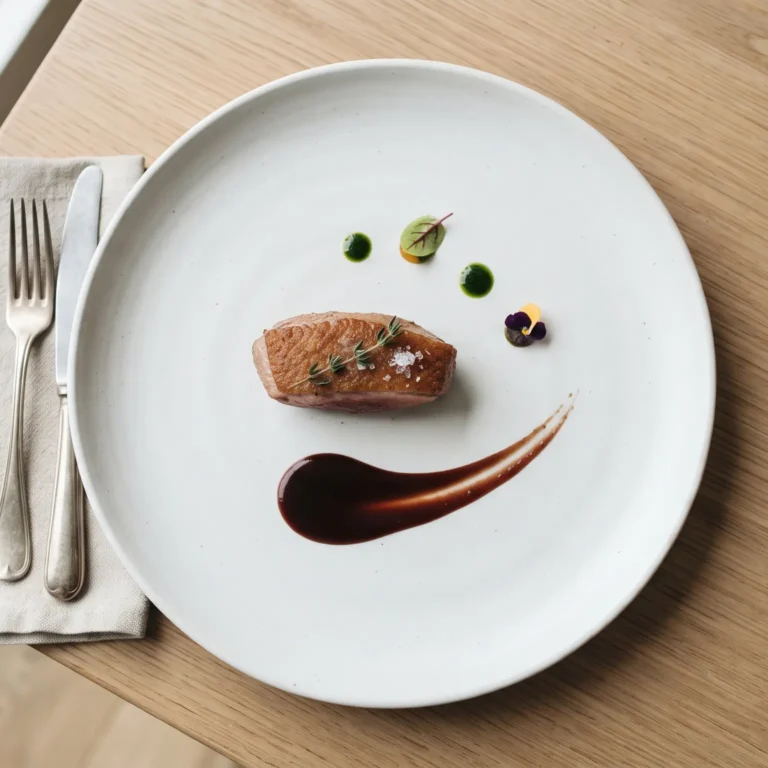
If the courses are sentences, the plating is the punctuation — and food plating is quite literally painting with ingredients. A dish with a single bold sauce stroke reads differently than one scattered with a dozen garnishes, the same way a short punchy sentence reads differently than one stuffed with clauses. The visual rhythm of a plate primes the diner for the pacing of the bite before they’ve even picked up a fork.
The Menu Card Itself Is a Voice
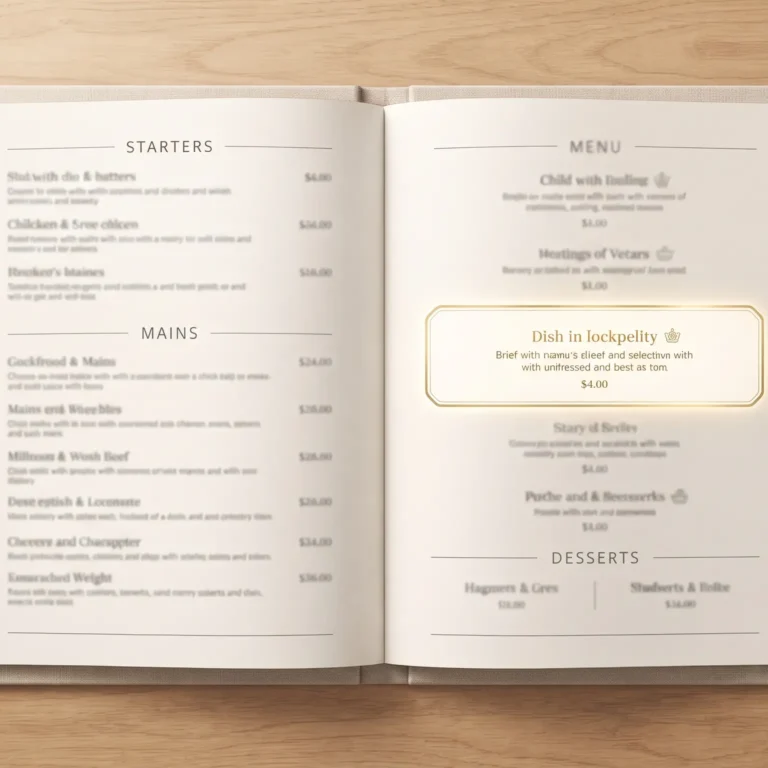
Before a single course arrives, the written menu card is already telling a story — and the words chosen on it function like a byline building a recognizable voice. A menu that lists “scallop, brown butter, hazelnut” reads differently than one that says “hand-dived scallop seared in burnt butter, toasted hazelnut.” Neither is wrong — but each sets a different tone for what’s about to be eaten, the same way a byline signals what kind of writer is about to speak.
Menu layout itself isn’t neutral either — the way dishes are grouped, spaced, and ordered on the page is its own design discipline, closely related to restaurant menu design as a craft in itself.
Reading the Table Before the Courses Arrive
A great chef — or a great front-of-house team — adjusts pacing based on the table, the same way a skilled negotiator reads the room before the numbers ever come up. A table celebrating an anniversary gets a different rhythm than a table of four strangers on a work dinner. The courses might stay the same, but the pacing between them — how long the kitchen waits, how the server frames each plate — is where the real storytelling happens.
The Climax: Why the Main Course Isn’t Always the Richest Dish
In a well-built tasting menu, the “climax” course isn’t necessarily the heaviest or most expensive ingredient on the table — it’s the course where everything the earlier plates set up pays off. This mirrors how a newsletter should read like a conversation building toward one clear point rather than a flat list of facts: the payoff only lands because of what came before it, not in spite of skipping straight to it.
Dessert as Resolution, Not Just Sugar
A dessert course that simply tastes good isn’t doing its job if it doesn’t resolve the tension built by the courses before it. The best desserts echo an ingredient or technique from earlier in the menu — closing a loop the diner may not have consciously noticed was open. It’s the edible equivalent of a well-written ending that calls back to its own opening line.
The Whole Menu Is a Brand, in One Sitting
A tasting menu, start to finish, functions the same way a business card compresses a whole brand into your palm — it’s a complete, compressed expression of a restaurant’s identity delivered in a single sitting. Every course, every pause, every plating choice is a brand decision, whether or not the diner consciously registers it as one.
Common Tasting Menu Mistakes (And the Fix)
| Mistake | Why It Fails | Fix |
|---|---|---|
| Heaviest dish served first | Diner has nowhere to build to, fatigue sets in early | Open light and intriguing, build intensity gradually |
| No pacing gaps between courses | Feels relentless, nothing gets to register | Build in deliberate pauses between richer courses |
| Too many “showstopper” dishes in a row | Diner can’t tell which moment actually mattered | Space standout courses apart, let simpler ones recover attention |
| Dessert disconnected from earlier courses | Feels like a separate meal, not an ending | Echo an ingredient or technique from earlier in the menu |
| Menu card language doesn’t match the food’s personality | Sets the wrong expectation before the first bite | Write menu descriptions in the same voice as the cooking style |
Frequently Asked Questions
Why is a tasting menu considered a form of storytelling?
Because its courses follow a narrative arc — an inviting opener, rising intensity, a climactic main course, and a resolving dessert — the same structural logic used in good writing, not just a sequence of unrelated dishes.
Why shouldn’t the richest dish come first in a tasting menu?
Because it leaves nowhere for the meal to build. Diners need room to anticipate increasing complexity, the same way a story needs restraint in its opening lines to earn attention later.
What role do pauses between courses play?
They function like white space in writing — giving the previous course room to register before the next one begins, preventing the whole experience from feeling relentless.
Does the dessert course need to connect to earlier dishes?
Not strictly, but the strongest tasting menus use dessert to resolve a theme or ingredient introduced earlier, giving the meal a sense of closure rather than feeling like a separate course tacked on.
Does menu wording affect how a dish is perceived?
Yes. The language used to describe a dish sets expectations before it arrives, the same way a writer’s voice signals tone before the reader gets to the content itself.