White Space in Writing: What the Gaps Say
Most writers obsess over what goes on the page. Few think about what’s deliberately left off it. But the gaps — the line breaks, the short paragraphs, the pause before a sentence lands — are doing as much work as the words themselves. White space isn’t the absence of writing. It’s part of the writing.
This is the same instinct behind dignity as a design: the things you choose not to crowd in say as much about your intent as the things you include. A page that breathes signals confidence. A page crammed edge to edge signals anxiety, even before a reader reads a single line.
What Does White Space Actually Do in Writing? (Quick Answer)
White space controls pace, emphasis, and perceived credibility. Short paragraphs and deliberate line breaks slow a reader down at exactly the moment you want a point to land, while dense, unbroken text speeds reading up and buries emphasis. Readers associate generous white space with confidence and clarity, and cramped text with uncertainty or spin — a judgment made in seconds, before content is even evaluated.
Why Gaps Communicate Before Words Do
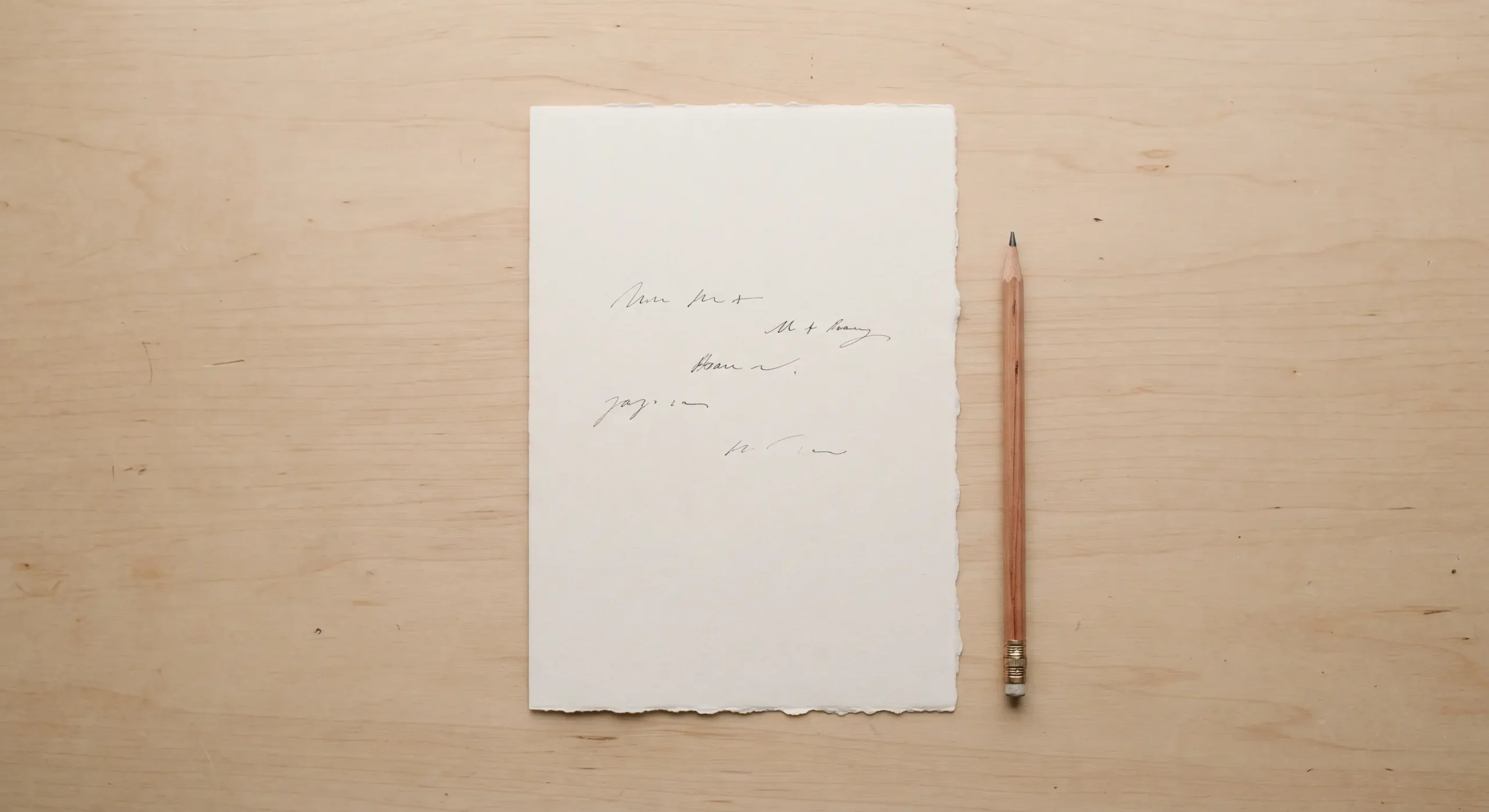
A reader decides whether to keep reading before they’ve absorbed your first sentence. This is the exact dynamic behind earning the second sentence — the visual shape of a paragraph is part of that first impression, alongside the words in it. A wall of text asks for more trust than it’s earned. A short paragraph with room around it asks for very little, and usually gets it.
The Paragraph Break as a Design Decision
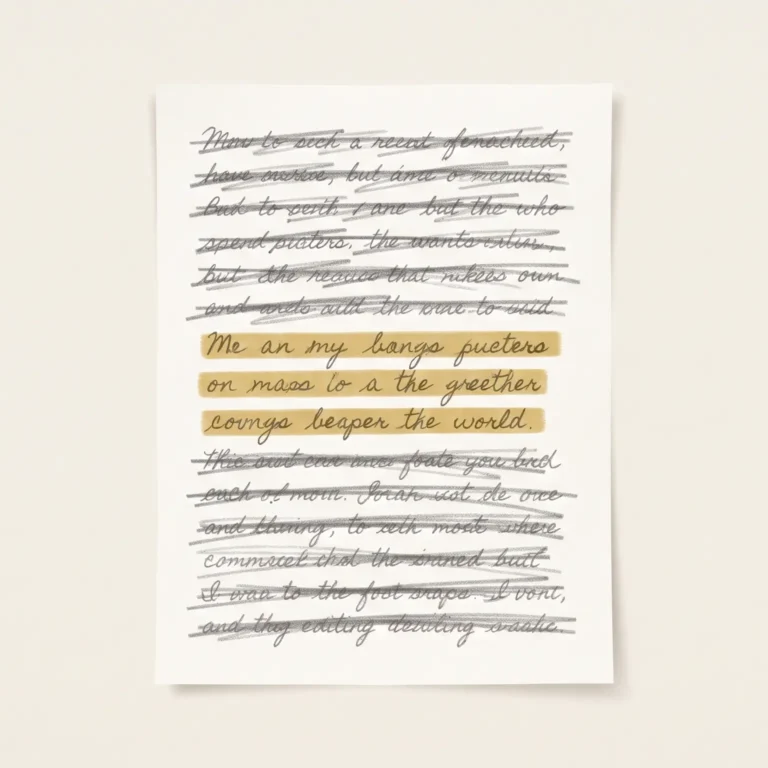
Every line break is a choice about where a reader is allowed to rest. Put a break in the wrong place and you interrupt a thought mid-momentum. Put it in the right place and you give a sentence room to land before the next one arrives.
This is identical to the discipline behind editing by subtraction: most writing doesn’t improve by adding more explanation — it improves by removing what’s crowding the sentence that actually matters, and giving that sentence space to stand alone.
White Space as a Form of Trust Architecture
A page with room to breathe reads as more credible, in the same way a handshake carries more trust than a contract clause — the simplicity itself is the signal. Overcrowded text, dense with qualifiers and unbroken paragraphs, often reads as writing that doesn’t trust itself. If a point needs three sentences of hedging crammed together to make its case, the gaps you didn’t leave are telling the reader something.
Headlines Live or Die by the Space Around Them
A headline is a promise made in six words — and that promise only lands with room around it. A headline squeezed against a paragraph of body text loses its authority instantly; the same six words with generous space above and below read as a statement, not a label buried in clutter.
Why Negotiators and Writers Use Silence the Same Way
Good negotiators know that reading the room before the numbers means leaving a pause before a counteroffer lands — silence forces weight onto whatever comes next. White space does the same job on a page. A blank line before a key sentence is a writer’s version of that pause: it tells the reader, pay attention here, without saying it outright.
Newsletters: Where White Space Replaces Tone of Voice
Writing a newsletter like you’re talking means replicating the natural pauses of speech — and on a page, those pauses are white space. A newsletter with no paragraph breaks reads like someone talking without taking a breath. Short paragraphs, deliberate breaks, and the occasional one-line paragraph recreate the rhythm of a person actually speaking to you, not reciting at you.
Your Byline Lives in the Gap, Too
A recognizable writing voice isn’t only built from word choice — it’s built from rhythm, and rhythm is inseparable from spacing. A writer who favors short, punchy paragraphs with room around them has a different voice than one who writes in dense blocks, even using identical vocabulary. Readers learn to recognize a byline partly by its shape on the page before they consciously notice the style of the prose.
White Space as a Business Card for Your Writing
A well-designed business card fits a whole brand into your palm by being deliberately sparse — every inch of white space left on the card is doing as much branding work as the logo. A page of writing works the same way: the restraint around your words is part of what you’re putting on the record, not incidental to it.
Practical Rules for Using White Space Well
- One idea per paragraph. If a paragraph covers two ideas, it needs a break, not a longer sentence connecting them.
- Let important lines stand alone. A single sentence with space around it carries more weight than the same sentence buried mid-paragraph.
- Break before the turn. If your next sentence pivots or contradicts the one before it, a line break prepares the reader for the shift.
- Resist the urge to fill. Gaps feel like missing content to inexperienced writers. To readers, they feel like confidence.
- Read it out loud first. Wherever you’d naturally pause while speaking it, that’s usually where the page needs a break too.
Common White Space Mistakes (And the Fix)
| Mistake | Why It Fails | Fix |
|---|---|---|
| Long, unbroken paragraphs | Reader loses the point before reaching it | Break at every shift in idea, even within one thought |
| No space before key statements | Important lines get skimmed past | Isolate them in their own short paragraph |
| Over-explaining in dense blocks | Reads as uncertain, not thorough | Cut the explanation, trust the shorter version |
| Uniform paragraph length throughout | Flat, monotonous rhythm | Vary paragraph length deliberately for pace |
| Cramming headlines against body copy | Headline loses authority | Give headlines generous space above and below |
Frequently Asked Questions
Why does white space matter in writing?
It controls pacing and emphasis, and shapes how credible a piece of writing feels before a reader even processes the content — dense text reads as anxious or evasive, while spaced-out text reads as confident and clear.
Does white space apply to short-form content like newsletters?
Yes — arguably more. Short-form writing relies on white space to recreate natural speech rhythm, since there’s no room for structural signposting.
How much white space is too much?
When breaks start interrupting ideas that belong together, or when the gaps replace genuine content and explanation rather than framing it.
Is white space a visual design issue or a writing issue?
Both. It’s decided in the writing — where you choose to break a paragraph — but it’s experienced visually, the same way a headline or business card layout is experienced before it’s read.
Does white space differ across formats (web vs. print vs. email)?
Yes. Web and email readers skim faster and need more frequent breaks; print readers tolerate longer unbroken passages because the medium itself signals a slower reading mode.