Newsletter: Writing Like You’re Talking to One Person
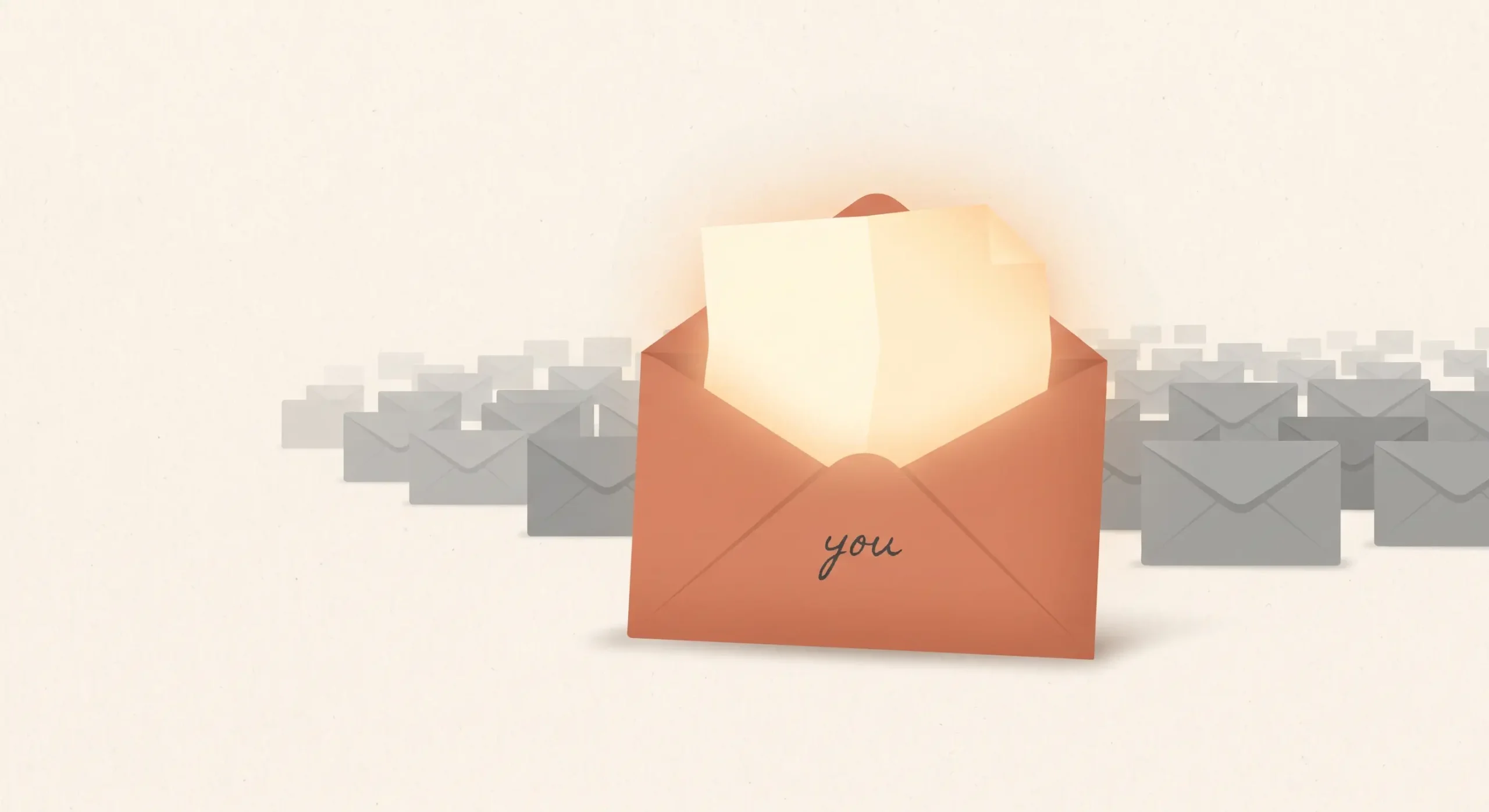
Open any newsletter that makes you feel something, and you’ll notice the same trick at work: it doesn’t read like it was sent to 40,000 people. It reads like it was written to you, specifically, at your kitchen table. That illusion isn’t an accident of style. It’s a deliberate choice about who the writer imagines on the other end of the sentence — one person, not a crowd.
Every effective piece of writing starts with that same decision. A pitch deck works because it’s structured as persuasion delivered to one skeptical investor, not a stadium. A newsletter works the same way — it’s a conversation wearing the costume of a broadcast.
Why Does “Writing to One Person” Work? (Quick Answer)
Writing a newsletter as if addressed to a single reader works because human brains process direct, personal address differently than mass messaging — it lowers defensiveness, increases attention, and creates the sense of being spoken to rather than at. The technique involves using “you” instead of “readers,” choosing concrete specifics over general statements, and writing at conversational pace rather than broadcast pace.
The Psychology of “You” vs. “Everyone”
The moment a sentence shifts from “our readers often ask…” to “you’ve probably wondered…”, something changes in how it lands. The first version describes a group the reader doesn’t belong to. The second one assumes the reader is already in the room.
This single-person framing shows up anywhere trust is being built one relationship at a time — the same instinct behind a handshake deal, where trust is architecture, not decoration. A newsletter that writes to “you” is quietly building the same kind of structural trust, one email at a time, long before any product is mentioned.
The First Line Decides Everything
Just like a blog post lives or dies by its opening sentence, a newsletter’s subject line and first sentence decide whether the “one person” illusion gets a chance to work at all. If the first line reads like a corporate announcement, the reader never settles into the conversational frame — they brace for a pitch instead of leaning into a message.
A good opening line does what a strong headline does: it makes a promise in six words — small, specific, and aimed at one reader’s actual problem, not a vague audience-wide concern.
Write Specifics, Not Averages
Newsletters addressed to “everyone” tend to default to vague, averaged-out language — because they’re trying to be relevant to the widest possible reader. But vague language is exactly what breaks the one-person illusion. “Many of our customers struggle with pricing” sounds like research. “You’ve probably stared at a pricing page wondering if $29 sounds more trustworthy than $30” sounds like someone who’s actually thought about your specific situation.
That same instinct for specificity over generality is what makes pricing itself a piece of psychology rather than a math problem — small, concrete choices read as more deliberate and more trustworthy than round, generic ones. The same logic applies to sentences: specific beats general, every time.
Read the Room Before You Hit Send
A good newsletter writer reads the room the same way a good negotiator does — checking the emotional temperature before leading with numbers or asks. Negotiation teaches that timing and tone matter as much as content; a newsletter sent the week of a market crash shouldn’t open with an upbeat product announcement, no matter how well it’s written. Reading context is part of writing to one person — because one real person exists in a specific moment, not a vacuum.
Editing Is What Makes It Sound Like One Person
The conversational, one-to-one tone that makes a newsletter feel personal rarely survives the first draft. It’s built in revision — the same way good blog writing is mostly subtraction, not addition. Every sentence that sounds like it’s addressing “our subscriber base” instead of “you” needs to be cut or rewritten. The draft usually has to get shorter, not longer, before it starts sounding like a real email to a real person.
Dignity Is Part of the Design
Writing to one person also means treating that person with the same respect you’d extend to someone sitting across from you — not talking down, not over-explaining, not assuming they need convincing of things they already know. That’s the same principle behind designing with dignity: good communication, like good design, assumes competence in the person receiving it rather than assuming ignorance.
The Small Details That Signal “One Person”
Just as a business card carries an entire brand in the palm of a hand through tiny, deliberate details — paper weight, font choice, spacing — a newsletter signals its intimacy through small choices: a first name in the subject line, a sign-off that sounds like a person and not a department, a P.S. that admits something small and human. These details cost almost nothing to include, but they’re often the entire difference between “email” and “message from someone I trust.”
The Structure of a One-Person Newsletter
| Element | Broadcast Version | One-Person Version |
|---|---|---|
| Subject line | “This Week’s Updates” | “I almost didn’t send this one” |
| Opening line | “We wanted to share…” | “You know that feeling when…” |
| Body tone | Lists and announcements | A story with one clear point |
| Sign-off | “The [Company] Team” | A first name, a real voice |
| Length | As long as there’s content | As short as the point allows |
Common Newsletter Mistakes (And the Fix)
| Mistake | Why It Fails | Fix |
|---|---|---|
| “Dear valued subscribers” | Instantly signals mass messaging | Use “you” or a first name |
| Leading with company news | Centers the sender, not the reader | Lead with the reader’s problem or curiosity |
| Over-explaining every point | Reads as talking down | Trust the reader; cut the over-justification |
| No single clear point | Feels like a list, not a message | One idea per email, stated early |
| Corporate sign-off | Breaks the illusion of a real person | Sign with a name and a human voice |
Frequently Asked Questions
Why should a newsletter be written as if to one person?
Because readers process direct, personal address differently than broadcast language — it reduces defensiveness and increases the feeling of being spoken to rather than marketed at, which builds trust faster.
What’s the easiest way to make a newsletter feel personal?
Replace plural, audience-wide phrases (“our readers,” “many of you”) with direct address (“you”) and replace vague statements with one specific, concrete detail.
Does a personal newsletter tone still work for business updates?
Yes — the information can be identical. What changes is the framing: addressed to one reader’s situation rather than announced to a crowd.
How long should a newsletter be?
As short as the single point requires. Most newsletters that feel personal are shorter than their broadcast equivalents, because editing removes the language that signals mass messaging.
Does the subject line matter as much as the body?
Yes — it’s the first signal the reader gets about whether this is a message to them or an announcement to everyone, and it sets expectations for everything that follows.