
Pricing: The Psychology Hidden in a Number
A number has no tone of voice. It can’t smile, pause, or soften itself. And yet “$49” and “$50” — a single dollar apart — can produce completely different decisions in a buyer’s mind. That gap isn’t math. It’s communication happening through a medium most people don’t think of as communication at all.
Pricing is a sentence with one word in it. And like any sentence, it’s read for more than its literal content — it’s read for confidence, intention, and what it implies about everything surrounding it.
What Makes a Price “Feel” Right? (Quick Answer)
A price feels right when its framing matches the trust already built with the buyer — the number itself matters less than the context around it: how it’s presented, what it’s compared to, and what silence or justification surrounds it. The same number can read as fair or exploitative depending entirely on delivery, not value.
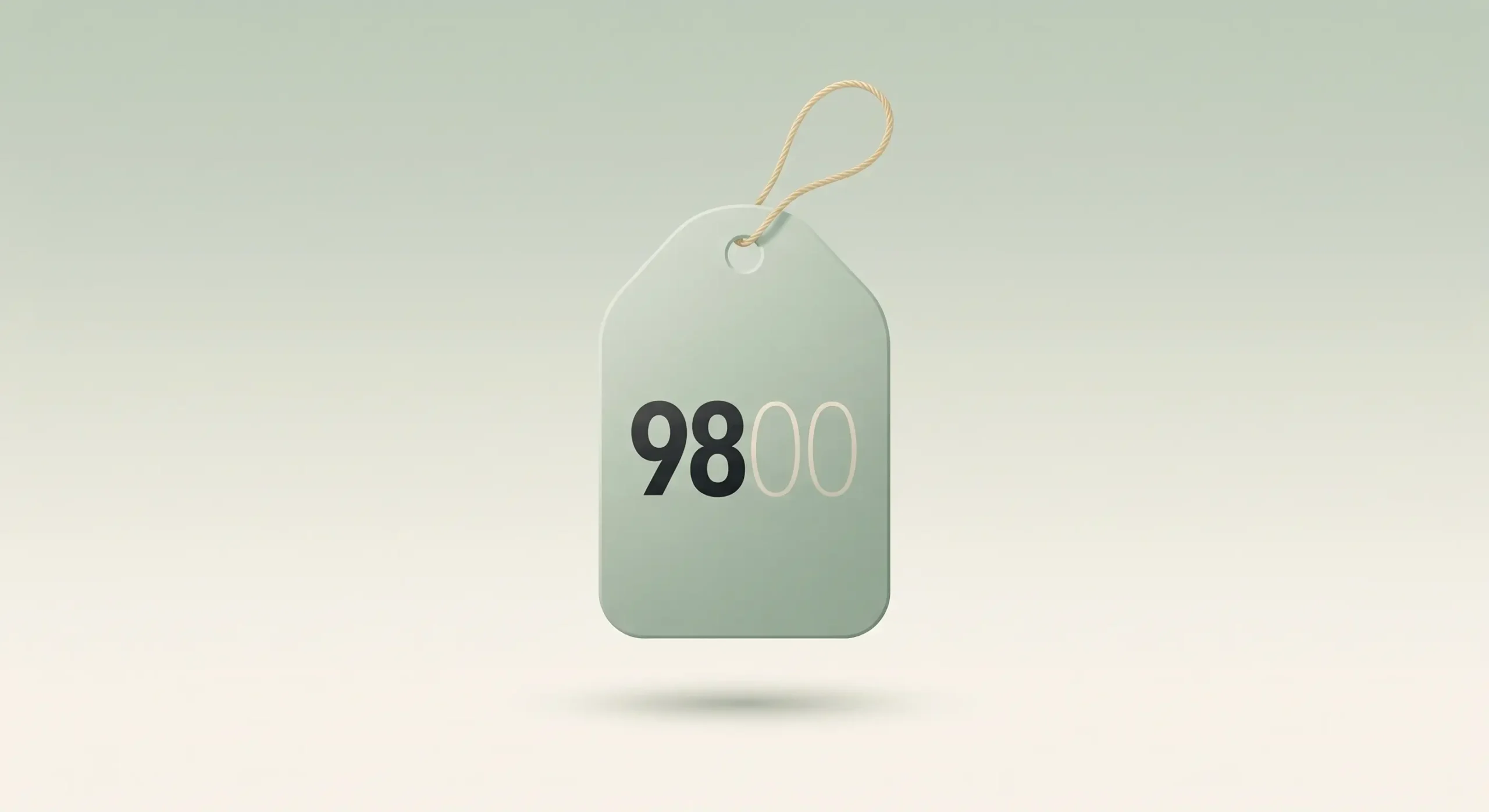
A Number Is a Message, Not Just Math
Every price sends a signal before a customer ever evaluates the product. $9.99 signals accessibility and volume. $999 signals exclusivity and confidence. Neither is objectively “better” — each is a message calibrated to a specific audience, the same way emojis function as tone of voice in a text message: the content might be identical, but the framing around it changes how it’s received entirely.
This is why two businesses selling nearly the same product at nearly the same price can have wildly different conversion rates. One is speaking fluently to its buyer. The other is using the right words in the wrong accent.
Why Round Numbers Feel More Expensive
$50 reads as a deliberate, calculated decision. $49 reads as a number someone optimized — which paradoxically makes it feel more considered, even cheaper, than the dollar saved would suggest. Buyers unconsciously process round numbers as premium signals and broken numbers as value signals. This single-digit shift is one of the oldest tricks in pricing psychology precisely because it works below conscious awareness.
The inverse is also true: luxury pricing deliberately uses round numbers ($1,000, not $999) because precision-pricing would undercut the premium signal the brand is trying to send.
Pricing Is a Form of Reading the Room
The right price for the same product changes depending on the room it’s presented in — a conference audience, a cold email, a returning customer, a first-time visitor. This is reading a room in its purest form: pricing pages, sales calls, and proposals all have to sense what the audience is primed to accept before the number ever appears. A price presented too early, before trust is built, gets read with suspicion regardless of how fair it actually is.
The Anchor Comes Before the Price
Just as a pitch deck builds a sequential argument where traction has to land before the ask, pricing works the same way: the number needs context before it, not after it. Showing the “was $199, now $129” anchor before the final price reframes the number as a discount rather than a cost. Order isn’t decoration here — it’s the entire persuasion mechanism.
A price shown with no anchor forces the buyer to evaluate it against their own internal, often harsher, benchmark. A price shown with the right anchor lets you set the benchmark yourself.
Silence After the Number Matters
In a live sales conversation, the instinct after stating a price is to immediately justify it — “…and that includes onboarding, support, and updates.” But that rush to fill the air often reads as anxiety about the price itself. Silence after a number can carry more confidence than any justification that follows it. A pause lets the buyer sit with the price rather than feel like they’re being talked past an objection before they’ve even raised one.
When Discounting Is Really a Refusal to Say No
Constant discounting is often a business’s inability to say no — to a customer’s hesitation, to a competitor’s lower price, to its own fear of losing the sale. A firm, undiscounted price is itself a form of refusal, delivered through a number instead of a sentence. Holding a price with confidence sends a signal that discounting away can quietly erase: that the price was considered, not arbitrary.
Pricing in Writing vs. Pricing Out Loud
A price delivered over email or on a pricing page has no tone of voice to soften it — the number has to do all the emotional work alone, which is why framing, whitespace, and comparison tables matter so much on a pricing page. A price delivered in a voice note or a call carries more risk and more nuance, because hesitation in the voice is audible in a way text never reveals. Know which channel you’re pricing in before you decide how much context the number needs around it.
Pricing Doesn’t Need Small Talk — It Needs Timing
Just as small talk exists to lower stakes before a real conversation begins, pricing works best when it arrives at the right moment in a relationship rather than too early or as an afterthought. A price mentioned before value is established feels like a wall. The same price mentioned after value is clear feels like a natural next step.
Common Pricing Psychology Mistakes (And the Fix)
| Mistake | Why It Fails | Fix |
|---|---|---|
| Leading with price before value | Forces the buyer to judge cost with no context | Establish the problem and outcome first |
| Using round numbers for mass-market products | Reads as expensive, uncalculated | Use charm pricing ($49, not $50) for volume products |
| Justifying a price immediately after stating it | Signals insecurity about the number | Pause. Let the price sit before adding context |
| No anchor before the final price | Buyer compares to their own internal benchmark | Show a reference price first to frame the number |
| Constant discounting | Erodes trust in the original price | Hold price, use value-adds instead of markdowns |
Frequently Asked Questions
Why does $49 feel cheaper than $50?
Non-round numbers read as calculated and deliberate, which buyers unconsciously associate with value — even though the difference is only one dollar. Round numbers, by contrast, read as premium or arbitrary depending on context.
What is price anchoring?
Price anchoring is showing a reference price (often a higher “original” price) before the final price, so the buyer judges the actual number against that anchor rather than against their own unguided expectations.
Does pausing after stating a price actually help close sales?
Yes. Immediately justifying a price can signal anxiety about it. A brief pause lets the number be considered on its own, which often reads as more confident and trustworthy.
Why do luxury brands avoid pricing like $999?
Round numbers ($1,000) signal premium positioning and intentionality, whereas charm pricing ($999) signals value-seeking — the opposite of what luxury branding wants to communicate.
Is discounting always bad for a business?
Not always, but frequent or reflexive discounting can undercut trust in the original price and condition customers to wait for markdowns rather than buy at full price.