Small Talk: The Art of Initiating a Conversation and Breaking the Ice With Strangers
Quick Answer
Small talk works best when it’s low-stakes, observational, and gives the other person an easy way to respond. The fastest way to break the ice with a stranger is to comment on something shared in the moment — the environment, the event, or a light observation — then follow with an open-ended question that invites more than a yes or no.
That’s the short version. Here’s the full picture.
Why Small Talk Feels Harder Than It Should
Most people don’t struggle with conversation itself — they struggle with the first ten seconds of it. That opening moment carries a disproportionate amount of social pressure: What do I say? What if it’s awkward? What if they don’t respond?
The irony is that small talk isn’t really about the words. It’s a protocol — a shared, low-risk ritual that lets two strangers establish that it’s safe to keep talking. In that sense, it has more in common with a technical handshake than people realize. Just as two systems exchange a simple signal before a real connection opens, two people exchange a simple comment before a real conversation opens. If you’ve ever thought about how software handles that first exchange, the idea of a good onboarding flow is a useful parallel — the first interaction should be simple, low-friction, and give the other party an obvious next step.

The Real Goal of Small Talk
Small talk isn’t about being interesting. It’s about being easy to talk to. People remember how a conversation felt, not the specific words used. Your job in the first minute isn’t to impress — it’s to lower the other person’s guard enough that a real exchange can happen.
This is why over-preparing clever openers often backfires. A memorized line can read as performance rather than genuine interest — similar to how a scripted, generic prompt to an AI system produces a flat, generic response. Getting a good result from any conversation — human or machine — depends on specificity and context, a principle covered in more depth in prompt engineering: talking to machines. The same logic applies here: a specific, situational opener beats a generic one every time.
5 Ways to Start a Conversation With a Stranger
1. Comment on the Shared Environment
The easiest opener references something you and the other person can both see or experience right now — a long line, bad weather, a slow elevator, an interesting detail at an event. Shared context removes the need for an introduction; you’re both already “in” the moment together.
“This line has not moved in ten minutes — are they understaffed or is this just a Monday?”
2. Ask a Low-Stakes, Open-Ended Question
Closed questions (“Are you enjoying the event?”) invite a one-word answer and a dead end. Open questions invite a story.
Instead of: “Do you work in tech?”
Try: “What’s keeping you busy these days?”
3. Give a Genuine, Specific Compliment
Specificity signals that you’re actually paying attention, not just being polite. “I like your jacket” is fine. “That color works really well with the room” is better because it’s observed, not generic.
4. Offer Help or Information
Small talk doesn’t have to start with a question. A small, helpful gesture — pointing out where the restroom is, offering a seat, mentioning the Wi-Fi password — opens the door naturally and feels less like an approach and more like courtesy.
5. Reference a Recent Shared Experience
If you were both just in the same meeting, talk, or queue, referencing it immediately gives you common ground without needing backstory.
Reading the Room Before You Speak
Not every moment is a good moment for small talk, and part of doing it well is knowing when not to start one. Someone with headphones in, eyes on a screen, or visibly rushing is signaling they don’t want an interruption right now. Approaching anyway — even with good intentions — can land the same way an unwanted interruption does in any other setting. The deeper etiquette of reading those signals, and why interrupting someone at the wrong moment damages rapport rather than building it, is explored in the etiquette of interrupting someone.
A simple rule: if you wouldn’t want to be interrupted doing what they’re doing, wait, or keep it to a two-second acknowledgment instead of a full opener.
Keeping the Conversation Going
Starting is only half the challenge — the other half is not letting the conversation die after the first exchange. A few reliable techniques:
- Follow up on details, not just topics. If someone mentions they just moved cities, ask about the move itself, not just “do you like it here?”
- Mirror their energy. Match their pace and tone rather than overcorrecting it.
- Avoid interrogation mode. Rapid-fire questions feel like a job interview. Alternate questions with small statements about yourself.
- Let silence breathe. A short pause isn’t failure — it’s often just processing time.
This mirrors a principle true in almost every form of communication, digital or in-person: clarity and tone matter more than volume of words. The same ideas that govern good communication etiquette in professional settings — clarity, timing, respect for the other person’s bandwidth — apply just as much to a conversation with a stranger at a party.
What Tone Looks Like Without Words
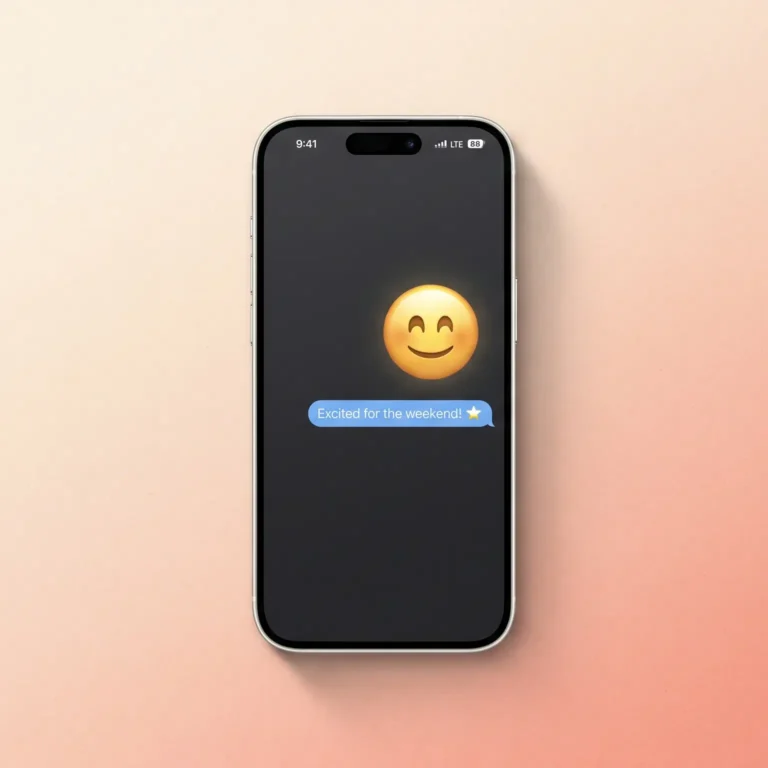
In face-to-face small talk, tone is carried by posture, pacing, and facial expression. In written small talk — texting someone new, messaging on a dating app, or chatting in a group thread — none of that exists by default. This is exactly the gap that emoji usage is designed to fill: a lightweight way to signal warmth, humor, or softness that plain text can’t carry on its own. The logic behind that substitution is broken down in emojis as tone of voice, and it’s directly relevant to digital small talk — a well-placed emoji can do the work that a smile or raised eyebrow does in person.
When Small Talk Goes Wrong — And How to Debug It
Sometimes an opener just doesn’t land. The other person gives a flat answer, the energy doesn’t build, or the exchange fizzles after one exchange. The instinct is to take this personally, but it’s more productive to treat it the way an engineer treats a failed test case: as information, not failure.
Was the timing off? Was the question too closed? Was the environment too noisy or too private for comfort? Social missteps, like software bugs, usually have a traceable cause once you stop reacting emotionally and start observing structurally — a mindset closer to debugging as detective work than to self-judgment. Most awkward small talk isn’t a reflection of charisma — it’s a reflection of one variable (timing, phrasing, context) that didn’t line up, and that’s fixable next time.
Small Talk as a Record of Rapport
Just as a good commit message captures why a change was made — not just what changed — a good small-talk exchange often leaves behind more than the literal words exchanged. People remember the feeling of ease, the small detail you noticed, the fact that you listened. The content of the conversation fades; the impression of how it felt to talk to you is what persists. That’s the real output of small talk — not information, but rapport.
Frequently Asked Questions
What is the easiest way to start small talk with a stranger?
Comment on something you’re both currently experiencing — the setting, the event, the wait — and follow with an open-ended question. Shared context removes the need for a formal introduction.
How do you avoid awkward silence in small talk?
Ask questions that invite a story rather than a yes/no answer, and follow up on specific details the person shares rather than switching topics abruptly.
Is small talk different in person vs. over text?
Yes. In person, tone is carried through body language and pacing. In text, tone has to be signaled explicitly — often through word choice and emojis — since none of the non-verbal cues exist.
Why does small talk feel harder with certain people?
Often it’s a timing or context mismatch, not a personal failing. Reading whether someone is open to conversation before starting one reduces most awkward interactions.
What’s a good small-talk question that isn’t generic?
Questions tied to the immediate moment (“What brought you to this event?”) tend to work better than abstract ones (“What do you do?”) because they’re easier to answer authentically.
Key Takeaway
Small talk isn’t a test of wit — it’s a low-stakes signal that says it’s safe to keep talking. The best openers are specific, situational, and considerate of timing. The goal isn’t to be memorable in the first ten seconds; it’s to be easy enough to talk to that a real conversation gets the chance to start.