Text Message: Emojis as Tone of Voice
Quick answer: In text messaging, emojis function as tone of voice because plain text strips out the facial expressions, vocal pitch, and body language that normally tell us whether a sentence is a joke, a complaint, or a compliment. An emoji restores that missing signal in a single character.
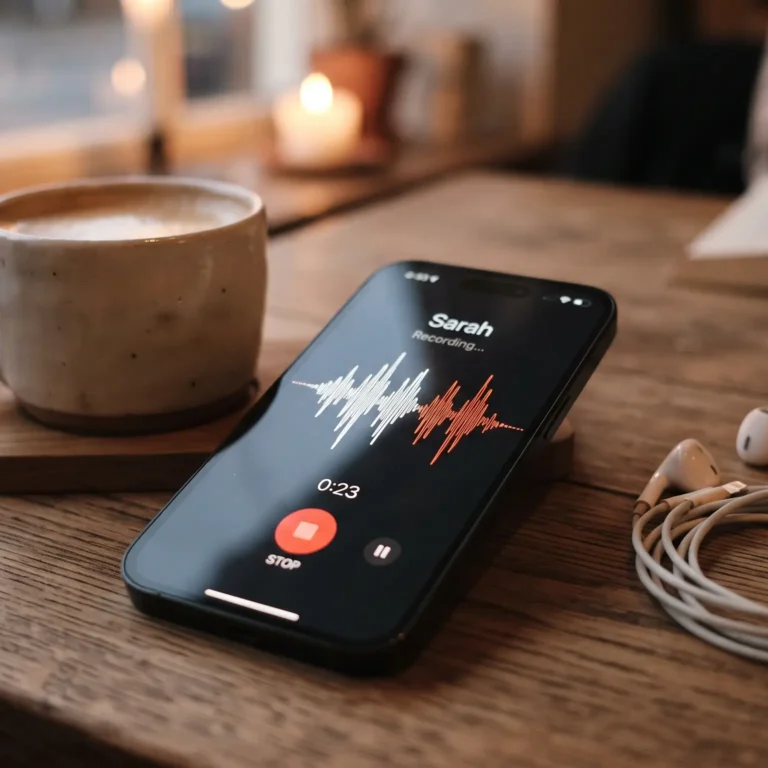
Text has a problem that speech never had.
When you say “sure, fine” out loud, your voice carries the whole truth. Flat and clipped, it means annoyance. Warm and quick, it means genuine agreement. The words are identical. The meaning is not.
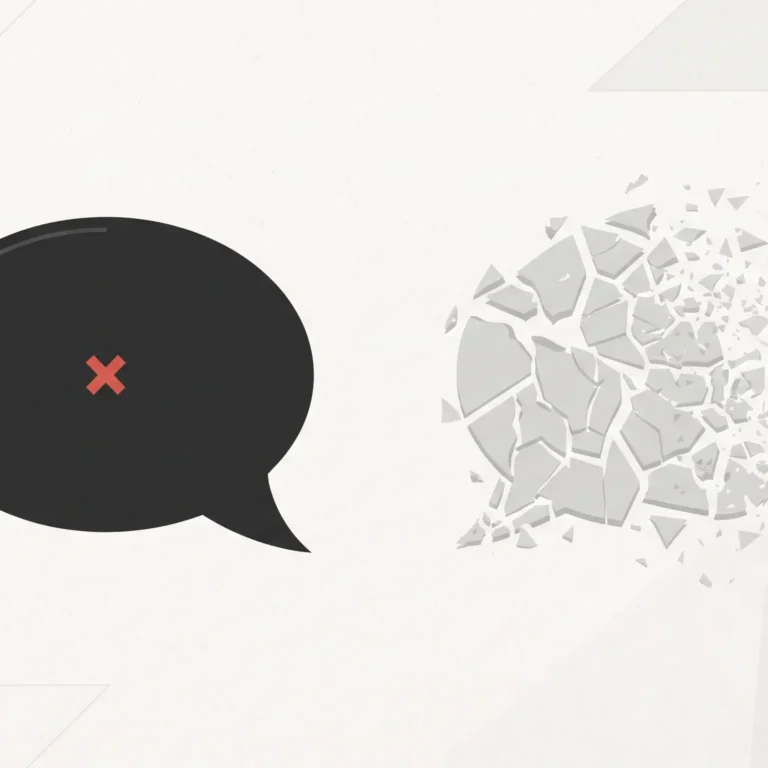
Send “sure, fine.” as a text message and that information is gone. The reader is left guessing — and people tend to guess the worst version of ambiguous things, a bias psychologists call negativity bias in text interpretation. This is the exact gap emojis evolved to fill.
What Does “Emojis as Tone of Voice” Mean?
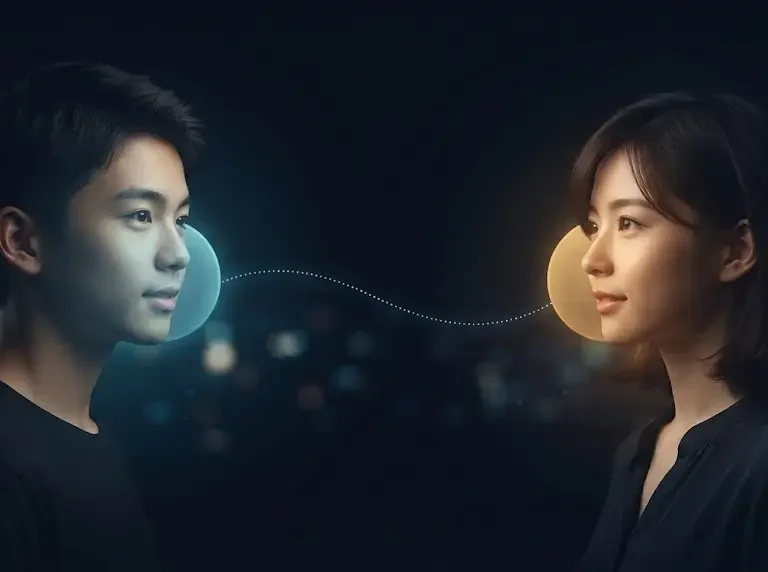
Tone of voice is the emotional coloring behind words — the difference between a sentence that sounds kind and the same sentence that sounds cold. In spoken language, tone comes from pitch, pace, volume, and facial expression. In text, none of that exists by default.
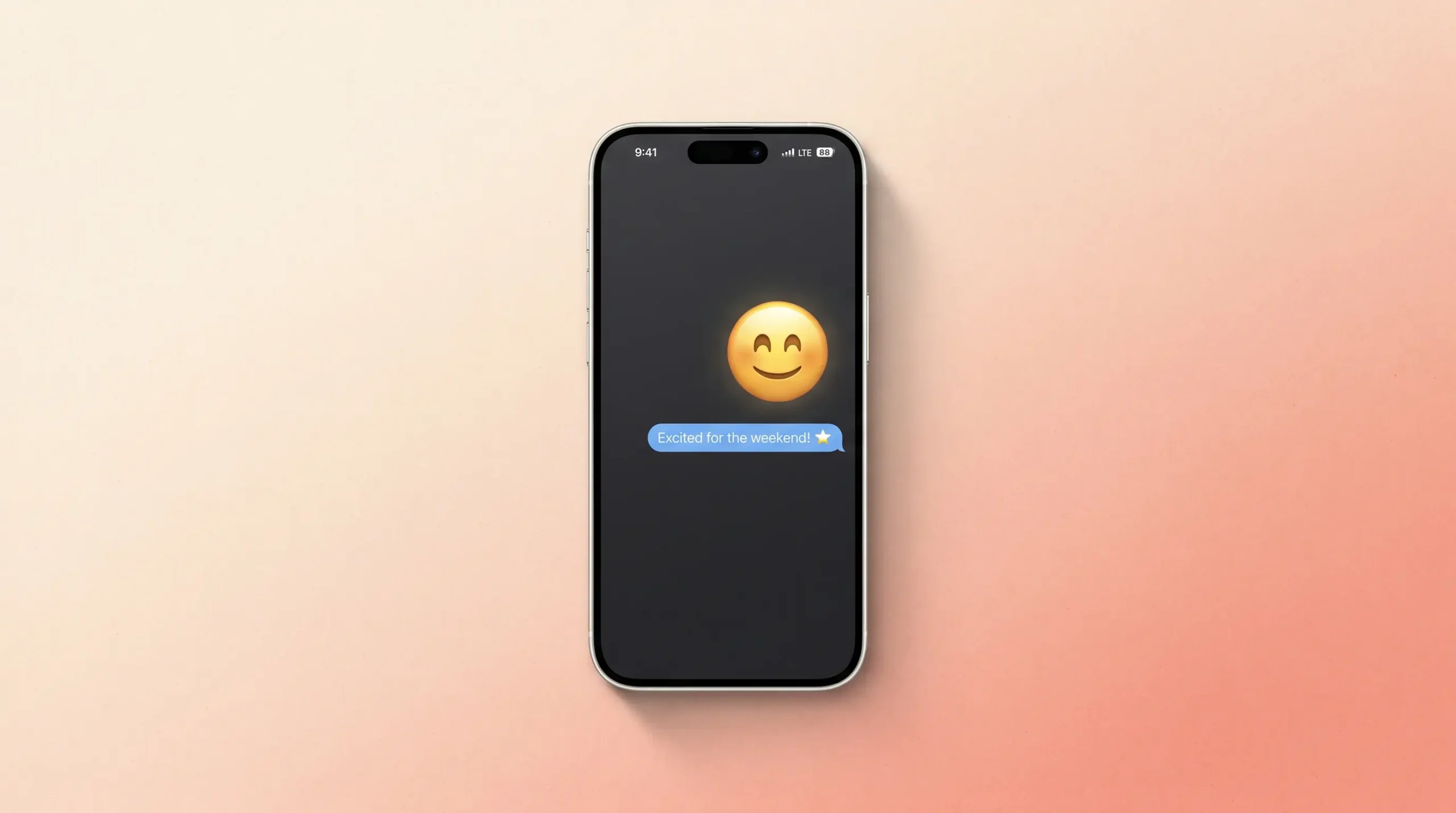
Emojis act as a substitute channel for tone. A 🙂 after “sure, fine” reframes the sentence as warm. A 😅 after “I guess I messed that up” reframes a confession as self-aware humor instead of genuine distress. The emoji isn’t decorating the sentence — it’s doing the job a raised eyebrow or a laugh would do in person.
This is why linguists increasingly treat emoji less like pictures and more like punctuation for emotion. A period ends a sentence. An emoji ends an ambiguity.
Why Plain Text Fails at Tone
Three things disappear the moment communication becomes text-only:
- Prosody — the rise and fall of a voice that signals sarcasm, sincerity, or surprise
- Facial expression — the micro-signals that tell a listener “I’m joking” before a word is even finished
- Immediate feedback loops — in conversation, confusion gets corrected in real time; in text, a misread message can sit for hours
This missing context is the same reason product teams spend so much energy on how an interface feels rather than just what it does. The gap between a feature working and a feature feeling right is the whole premise of the art of app design, where function meets feeling — and texting has the identical problem, just solved with a keyboard shortcut instead of a design system.
The Grammar of Emoji Placement
Emoji don’t just add emotion — they have position-dependent meaning, almost like grammatical markers.
| Position | Function | Example |
|---|---|---|
| End of sentence | Softens or confirms tone | “Can you send that over 🙂” |
| Replacing a word | Compresses meaning | “On my way 🏃” |
| Standalone reply | Full response, no text needed | 👍 |
| Mid-sentence | Emphasis or aside | “That meeting was… a lot 😮💨 honestly” |
| Repeated | Intensifies emotion | “I’m dead 💀💀💀” |
A single 🙂 at the end of a sentence reads as polite warmth. The same emoji doubled or placed oddly can read as passive-aggressive — proof that emoji usage has unwritten rules, the same way notification etiquette has unwritten rules about when it’s acceptable to interrupt someone, not just whether a message is allowed at all.
Common Emoji Misreadings (And Why They Happen)
Emoji meaning isn’t universal — it shifts by age, platform, and culture, which is exactly why so many conversations go sideways.
- The 🙂 vs 😊 generational gap. To many younger users, a plain smiley reads as passive-aggressive or forced; a 😊 reads as genuinely warm. To older users, it’s often the reverse.
- The 💀 as laughter. Used to mean “I’m dying of laughter,” not distress — a reading that makes no sense outside its subcultural context.
- The thumbs-up 👍 as curt. In many workplace chats it reads as dismissive, even though it’s meant as simple acknowledgment.
Misreading one of these is a small, low-stakes version of the same instinct that drives real troubleshooting: something looks broken, so you go looking for the cause. Figuring out why a text landed wrong is, in miniature, debugging — detective work disguised as engineering. You’re tracing a bug back to its root cause; the “bug” just happens to be a feeling instead of a function.
Emojis in Professional Communication
The rules change by context, and getting this wrong costs more than an awkward reply.
Where emoji help:
- Softening a blunt instruction (“Please resend this 🙏” vs. “Please resend this.”)
- Signaling informality in a casual team channel
- Confirming receipt without a full sentence (👍 instead of “Got it, thanks”)
Where emoji hurt:
- Formal client communication, especially first contact
- Messages delivering bad news — an emoji can read as flippant
- Cross-cultural teams, where the same emoji carries different connotations
There’s a useful parallel here to how developers are taught to write commit messages: the best ones are clear, context-appropriate, and say exactly what happened without extra noise. Emoji in professional texting follow the same discipline — they should clarify tone, not clutter it.
Dark Patterns: When Emoji Hide Real Meaning
Emoji can also obscure feeling instead of expressing it. A 😂 tacked onto a genuinely hurtful comment is sometimes used to pre-emptively deflect accountability — “I was just joking” built directly into the message. A 🙂 at the end of a tense sentence can function as forced politeness rather than real warmth, the texting equivalent of a smile that doesn’t reach the eyes.
This is tone used strategically rather than honestly — similar to how visual design choices can quietly shape how trustworthy or calm an interface feels. Dark mode exists partly for genuine comfort in low light, and partly because it feels premium — mood engineered through a design decision, the same way an emoji can engineer a mood that isn’t quite true.
How to Use Emoji Well: A Practical Framework
- Match the emoji to the actual emotion, not the one you want the reader to assume.
- One tone-setting emoji per message is usually enough. Stacking dilutes rather than intensifies.
- Read the thread, not just the message. Emoji norms shift per group chat, per workplace, per relationship.
- When in doubt with new contacts, under-use rather than over-use. It’s easier to warm up a tone later than walk back an overfamiliar one.
- Never use emoji to soften something that should land seriously. Bad news deserves clarity, not a cushion that undercuts it.
This kind of calibration — learning the local norms of a new communication space — is a lot like onboarding a new user into a product. Nobody hands you the emoji rulebook for a new group chat; you infer it from context, the same way a well-designed onboarding flow teaches a user the rules of an app without ever showing them a manual.
Emoji vs. AI: Two Different Tone Problems
Interestingly, the tone problem in texting has a mirror image in how humans talk to AI. When you type a prompt to an AI model, there’s no emoji convention to signal “I’m joking” or “this is urgent” — tone has to be spelled out in words, because the model has no shared cultural context for 💀 or 😩. That’s part of what makes prompt engineering, or talking to machines, a genuinely different skill from texting a friend: one relies on compressed, shared emotional shorthand, the other demands explicit, literal instruction.
Frequently Asked Questions
Do emojis really count as tone of voice?
Yes. Linguists classify emoji as paralinguistic signals — markers that convey emotional and social meaning the way tone, pitch, and facial expression do in speech, rather than carrying literal meaning the way words do.
Why do texts without emoji sometimes feel cold or rude?
Because plain text defaults to neutral-to-negative interpretation. Without a tone marker, readers often assume the more serious or critical reading of an ambiguous sentence — a well-documented bias in text-based communication.
Is using too many emoji unprofessional?
Context-dependent. In most workplaces, one well-placed emoji to soften or confirm tone is fine; stacking several emoji in formal or high-stakes messages can undercut credibility.
Do emojis mean the same thing to everyone?
No. Meaning varies significantly by age group, platform, and culture — the same emoji can read as warm to one person and sarcastic to another.
Should you use emoji when delivering bad news over text?
Generally no. Serious or sensitive messages are usually better sent without a softening emoji, since it can read as minimizing the situation.
Key Takeaway
Emoji exist because text removed something human communication has always relied on: tone. A 🙂 isn’t filler — it’s doing the work a smile, a pause, or a raised eyebrow would do face to face. Used well, emoji restore clarity to typed conversation. Used carelessly, they can muddy it just as easily as a flat, toneless sentence would.
The real skill isn’t knowing which emoji to use — it’s knowing when a message needs tone restored at all, and reading the room closely enough to pick the right signal.
picassoart.pk — for more on how design, language, and communication shape the way digital products feel.