Voice Note: Intimacy Without Eye Contact
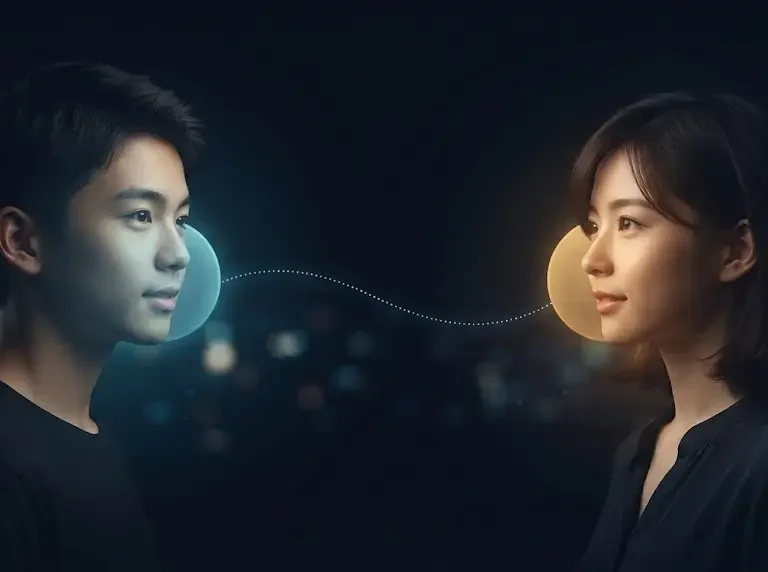
There is a strange kind of closeness that happens when you hear someone’s voice but cannot see their face.
No eye contact. No posture to read. No room to perform.
Just breath, tone, pacing, and the small imperfections that make a voice sound human — a pause before a hard sentence, a laugh that cuts itself off, the sound of someone exhaling before they say the thing they actually mean.
This is the quiet power of the voice note: intimacy without the pressure of being watched.
Why Voice Notes Feel More Personal Than Text
Text strips communication down to words alone. A voice note restores almost everything else — tone, rhythm, hesitation, warmth — while still removing the one thing that makes most people self-conscious: being looked at.
That combination matters. Eye contact is cognitively demanding. It signals evaluation. The moment someone is watching your face, you start managing it — adjusting your expression, softening a reaction, performing composure you may not feel.
Remove the eyes, and something loosens. People say truer things. They trail off mid-thought instead of editing themselves into a clean sentence. They send the message, pause, and sometimes immediately start a second one — “actually, what I meant was—”
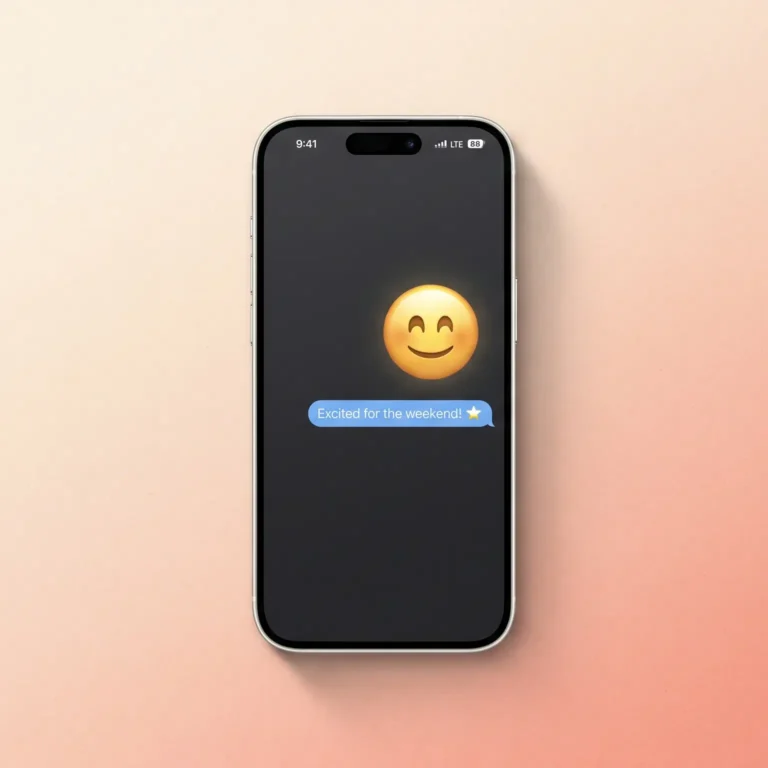
That messiness is not a flaw of voice notes. It’s the point. It’s the same reason a handwritten text message sent via emoji can carry more real feeling than a perfectly punctuated paragraph — tone leaks through the cracks in polish, not the polish itself.
The Psychology of Audio-Only Closeness
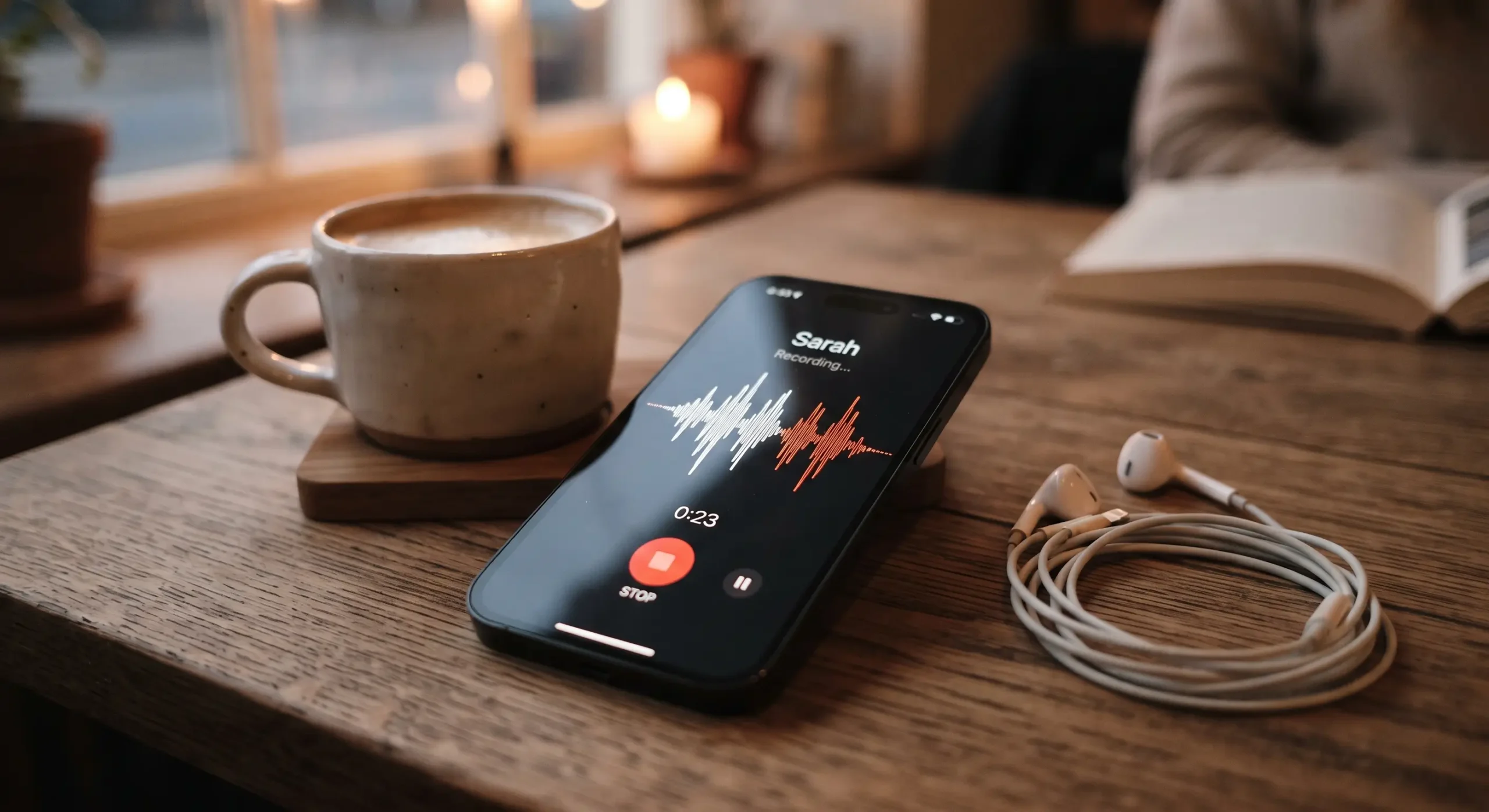
Voice carries emotional information that text simply cannot encode: micro-pauses, breath patterns, the slight waver that means someone is nervous, the warmth that means someone is smiling even if you can’t see it.
Psychologically, this creates a paradox. Voice notes feel more exposing than text because tone is harder to fake — but less exposing than video or a live call because there’s no face being watched in real time. The sender can press record, say the hard thing, and send it without watching the listener’s reaction land.
This is why voice notes have become the medium of choice for:
- Apologies that are easier spoken than typed
- Long emotional updates between close friends
- Check-ins that need warmth a text can’t carry
- Moments when someone wants to “be there” without the performance of a video call
It’s a form of communication etiquette all its own — one with unwritten rules about when a voice note is welcome and when it’s an imposition, much like the broader norms explored in communication etiquette.
Intimacy Without Eye Contact: What the Absence Creates
Removing eye contact doesn’t remove connection — it changes its shape.
1. It lowers the stakes of vulnerability.
Saying something hard out loud, alone in a room, with no face watching you say it, is easier than saying it to someone’s eyes. The listener still hears everything — but the sender isn’t bracing for a visible reaction mid-sentence.
2. It preserves the listener’s privacy too.
The person receiving a voice note can react however they want — cry, laugh, wince — with nobody watching them do it. That privacy often makes people more receptive, not less.
3. It slows the exchange down.
Unlike a call, a voice note isn’t live. There’s a built-in pause between sending and receiving, and another before a reply comes back. That gap gives both people room to process — a small mercy that live conversation, like reading a room that isn’t a room, doesn’t always allow.
4. It makes silence easier to sit with.
A pause in a voice note isn’t awkward the way a pause in a face-to-face conversation can be. Nobody is watching you think. This is part of why some of the hardest conversations — including saying no, as its own kind of craft — are easier to navigate through voice than face-to-face refusal.
When Voice Notes Work Best
Not every exchange benefits from audio. Voice notes tend to shine in specific contexts:
- Emotional nuance over efficiency — when how something is said matters as much as what is said
- Asynchronous closeness — maintaining intimacy across time zones or busy schedules without demanding a synced call
- Low-pressure vulnerability — sharing something personal without real-time reaction management
- Warm small talk — the audio equivalent of breaking the ice in small talk, where tone does the social work that a dry text can’t
They tend to work less well for anything transactional, time-sensitive, or easily misread — situations better served by a clear written message or a quick call.
The Interface Layer: Designing for Intimacy
It’s worth noting that voice notes didn’t become culturally significant by accident — they were designed into messaging apps deliberately, with onboarding flows that nudge first-time users toward trying them. The way a product introduces a new behavior — easing someone into recording their first message without friction — is its own discipline, closely related to designing a good onboarding flow.
And just as product teams iterate on these small emotional interfaces, they also have to communicate the reasoning behind each change clearly to each other — which is why the discipline of writing a good commit message and the discipline of writing a good voice note aren’t as unrelated as they first sound. Both are about compressing intent into a short, honest artifact someone else will later have to interpret without you in the room.
Even the underlying systems that power transcription, tone detection, or auto-generated captions on voice notes rely on carefully engineered prompts behind the scenes — a reminder that even the most human-feeling technology still runs on prompt engineering: talking to machines. And when those systems misfire — mistranscribing a word, cutting off a sentence — someone has to trace it back, applying the same patient process behind debugging as detective work disguised as engineering.
The Bigger Picture
Voice notes sit in an interesting gap in how we communicate — more revealing than text, less exposing than video, asynchronous but still deeply human. They prove that intimacy doesn’t require eye contact, or even real-time presence. It just requires enough honesty to leak through, and enough privacy for the other person to feel safe receiving it.
In a world of increasingly polished, curated communication, the slightly messy, unedited voice note might be one of the last genuinely intimate formats left — not despite its imperfections, but because of them.
Explore more on how we communicate, build, and connect: Picasso Art
Frequently Asked Questions
Why do voice notes feel more intimate than phone calls?
Because they remove the real-time pressure of reacting live. The sender can speak freely without watching the listener’s face, and the listener can process the message privately before responding.
Are voice notes better than texting for emotional conversations?
Often, yes — tone, pacing, and warmth carry emotional nuance that plain text can’t, making voice notes especially effective for apologies, check-ins, and vulnerable updates.
Do voice notes replace video calls?
No — they serve a different purpose. Video calls add visual presence and real-time interaction; voice notes offer asynchronous intimacy without the pressure of being watched.