Apology: Getting the Order of Words Right
Most people think an apology fails because of sincerity. It rarely does. It fails because of sequence.
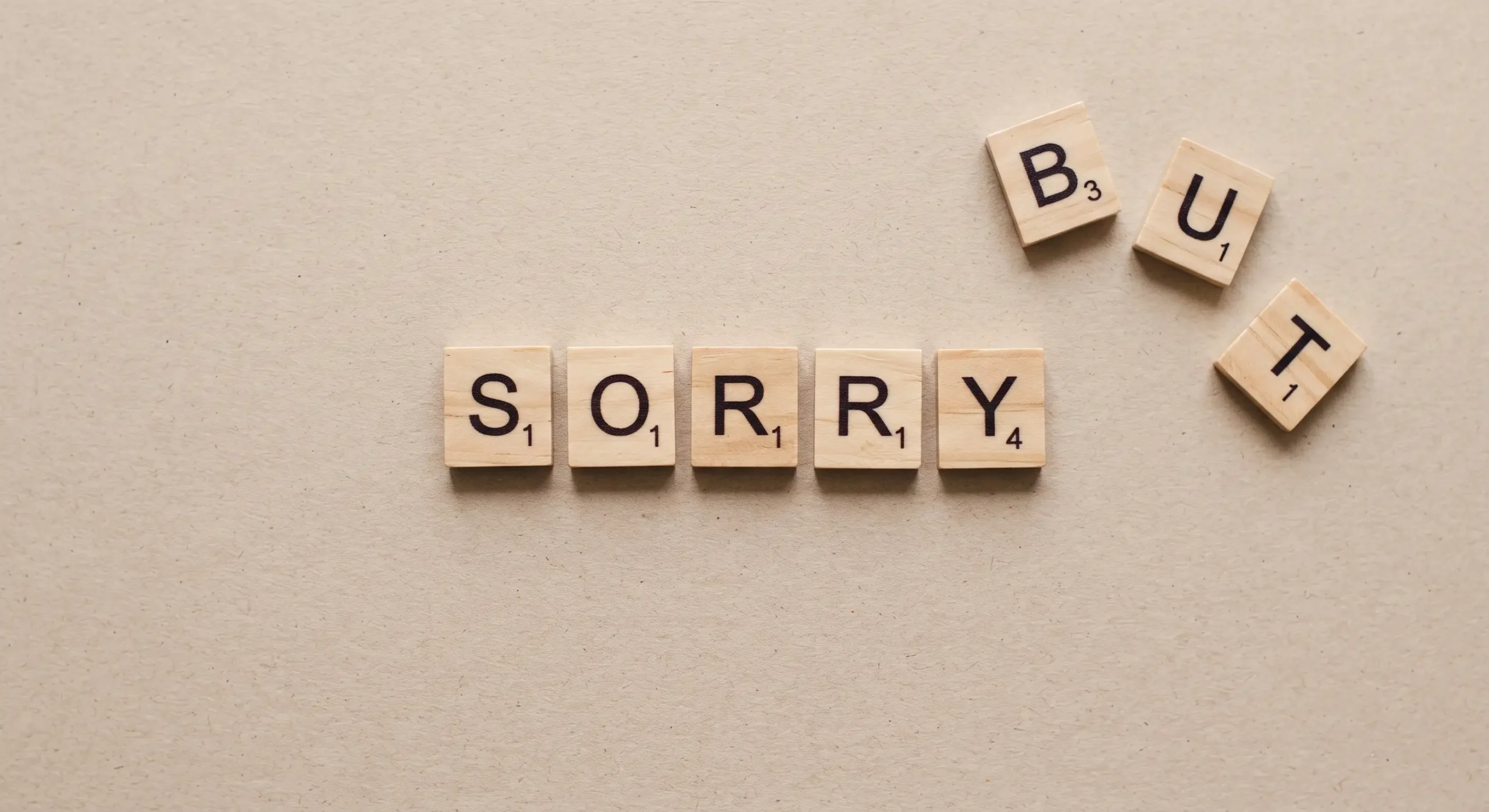
Say “I’m sorry, but you also…” and the apology is already dead — not because the feeling behind it was fake, but because the words arrived in the wrong order. The listener never got past “but.” Everything after it sounds like an excuse, even when it isn’t one.
This is the part of communication etiquette nobody teaches directly: apologies aren’t judged by intention. They’re judged by architecture — the order in which words land.
What Makes an Apology “Work”? (Quick Answer)
A working apology follows a strict sequence: acknowledgment → ownership → impact → repair → no conditions. Any justification, excuse, or “but” inserted before repair collapses the entire structure, regardless of how sincere the speaker is. The order matters more than the vocabulary.
Why Order Matters More Than Words
An apology is a small piece of engineering. Like prompt engineering, the way you sequence information changes how it’s received — not just what information you include. A listener processes an apology linearly, in real time, and each word either builds trust or erodes it before the next word arrives.
Say the same five ingredients in the wrong order, and you get a defense, not an apology:
“I know I was late, but traffic was insane, and you also didn’t text me the address until last minute, so I’m sorry if that bothered you.”
Reorder it:
“I was late and that cost you time you can’t get back. I’m sorry. Next time I’ll leave earlier and confirm the address the night before.”
Same facts. Same person. Completely different emotional outcome — because the second version never gives the listener a reason to brace for a “but.”
The Five-Part Structure of a Correct Apology
- Acknowledgment — Name exactly what happened, without softening it.
- Ownership — Use “I,” not “we,” “it,” or passive voice. (“I missed the deadline,” not “the deadline was missed.”)
- Impact — State what it cost the other person — time, trust, stress — before explaining yourself.
- Repair — Offer a concrete next step, not a vague promise.
- No conditions — Never attach “but,” “if,” or “you also.” Each of these words quietly transfers blame back onto the listener.
Skipping step 3 is the most common failure. People jump from ownership straight to repair, and the apology feels hollow — technically correct, emotionally empty. The listener needs to feel seen before they can feel reassured.
Why “I’m Sorry, But…” Never Works
The word “but” functions as an eraser. Cognitively, listeners discount almost everything that came before it and treat everything after it as the “real” message. So “I’m sorry, but I was stressed” is heard as “I was stressed” — the apology simply doesn’t register.
This is the same principle behind saying no as a craft: how you decline something matters as much as whether you decline it. Word order carries emotional weight independent of content.
Reading the Moment: Apology Isn’t One-Size-Fits-All
A good apology also depends on reading the room — in person, in a group chat, or over text. The same five-part structure needs different delivery depending on context:
- In person: tone and pacing matter as much as words. A rushed apology reads as insincere even if the structure is perfect.
- Over text: word order is everything, because there’s no tone of voice to soften a misstep. This is also why emojis function as tone of voice — a single 🙏 or 😅 placed after “I’m sorry” can shift how sincere the message reads, for better or worse.
- In a voice note: apologies carry more risk and more intimacy, because voice removes the buffer of eye contact — hesitation, tone shifts, and pauses are all audible evidence the listener will weigh.
When Silence Says More Than Words
Sometimes the most important part of an apology isn’t the sentence — it’s the pause before it. What we don’t say often carries more weight than what we do. A beat of silence before “I’m sorry” signals that you actually considered what happened, rather than reciting a script. Rushing straight into words can make even a well-structured apology feel automatic.
Apologies Are a Form of Debugging
There’s a reason a good apology resembles debugging: you’re not just patching the surface symptom (“I’m late”), you’re tracing it back to the actual fault (not leaving on time) and fixing that, not just apologizing for the output. An apology that doesn’t name the real cause is like a patch that doesn’t address the root bug — it’ll recur.
Where Apologies Go Wrong First: Onboarding Relationships
The earliest apologies in any relationship — professional or personal — set the pattern for every apology after it. This is effectively an onboarding flow for trust: the first time someone sees how you apologize, they calibrate how much to trust your future apologies. Get the order right early, and repairs get easier over time. Get it wrong, and every future “sorry” is read with suspicion.
Apology as Small Talk’s Opposite
Small talk opens a conversation by lowering stakes. An apology does the reverse — it raises them, deliberately, because avoiding the stakes is what damaged the relationship in the first place. Trying to apologize through small talk (“hey, so, anyway, about yesterday…”) usually backfires, because it signals you’re trying to soften something that needs to be said plainly.
Common Apology Mistakes (And the Fix)
| Mistake | Why It Fails | Fix |
|---|---|---|
| “I’m sorry you feel that way” | Shifts blame to the listener’s reaction, not your action | “I’m sorry I did that” |
| “I’m sorry, but…” | Erases everything before “but” | Remove the justification entirely, or offer it only if asked |
| “We should apologize” | Diffuses ownership | “I should apologize” |
| Apology with no repair step | Feels like words without change | Always name one concrete next action |
| Apologizing immediately, no pause | Reads as scripted or reflexive | Let a beat of silence show you registered the impact |
Frequently Asked Questions
Why does the order of words in an apology matter?
Because listeners process apologies in real time, word by word. A conditional word like “but” placed early reframes everything that follows as justification, not remorse — even if the speaker’s intent was sincere.
What’s the correct order for an apology?
Acknowledgment, ownership, impact, repair — in that order, with no conditional language attached.
Why does “I’m sorry, but” ruin an apology?
“But” functions as a cognitive eraser. The listener discounts what came before it and hears only what follows, which usually sounds like an excuse.
Does an apology need a repair step?
Yes. Acknowledgment without a concrete next step can feel like words without accountability — it answers “what happened” but not “what changes.”
Are apologies different in text vs. in person?
Yes. In person, tone and timing carry meaning words alone can’t. In text, word order and even emoji placement carry that same emotional weight instead.