The Well-Set Table: Hospitality as Composition
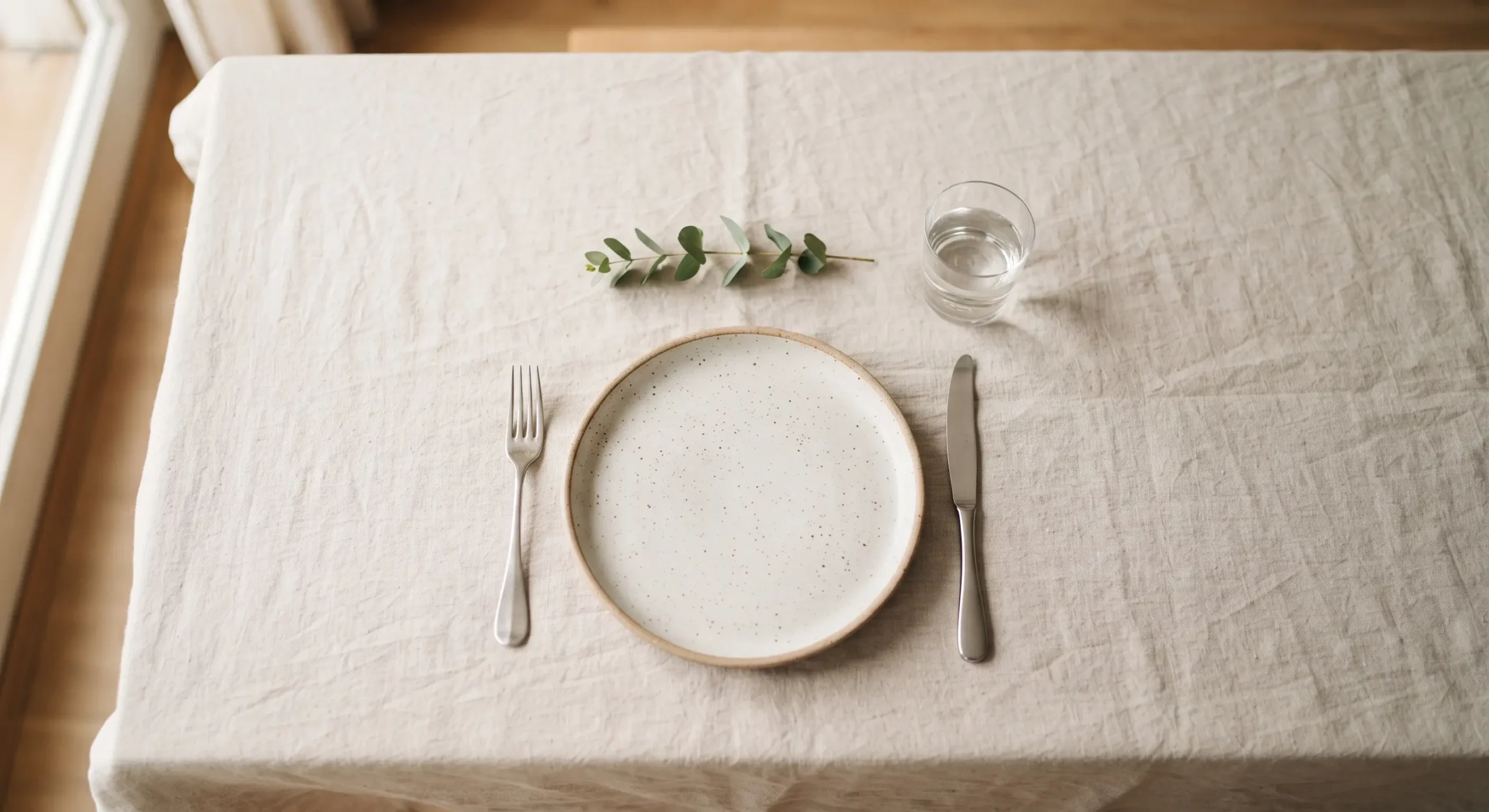
Before a single dish arrives, the table has already spoken. The spacing between the fork and the plate, the angle of the knife, the empty space left deliberately bare — all of it communicates something to the guest before they’ve said a word or tasted anything. A well-set table isn’t decoration. It’s composition. And like any good composition, what’s left out matters as much as what’s placed down.
What Does It Mean to Set a Table as “Composition”?
Setting a table as composition means treating each placement — plates, glassware, cutlery, linen, negative space — as a deliberate visual and emotional signal, not a functional checklist. The arrangement should guide the guest’s attention, set the pace of the meal, and communicate care before any food is served, the same way a well-edited piece of writing or a well-plated dish communicates intention through restraint.
Hospitality Starts Before the First Bite
A guest reads a table the way a reader reads a headline — in a fraction of a second, forming an impression that colors everything that follows. A cluttered table with too many glasses, too many utensils, and no breathing room feels anxious before anyone sits down. A table with restraint — fewer pieces, more space between them — signals confidence. The host is saying: we know what we’re doing, and we’re not going to overwhelm you.
This is the same instinct behind a strong first sentence: it has to earn the guest’s trust immediately, or everything after it is read with suspicion.
Negative Space Is Part of the Setting
The bare tablecloth between the charger and the next guest’s place isn’t empty — it’s doing work. Just like white space in writing gives a reader room to breathe between ideas, negative space on a table gives a guest room to settle in before the visual density of food and conversation arrives. A table packed edge to edge with glassware, candles, and centerpieces leaves no room for the meal itself to become the focal point.
The best table settings understand this instinctively: less on the table means more attention on the person across from it.
Table Setting Follows the Same Logic as Editing
A set table, like a good piece of writing, is improved far more by subtraction than addition. Editing is subtraction — removing the extra adjective, the redundant clause, the sentence that doesn’t earn its place. Table setting works identically: every extra fork, unnecessary charger plate, or decorative flourish that doesn’t serve the meal is a sentence that should have been cut.
A table set for a five-course dinner needs exactly the utensils that meal requires — no more. Anything beyond that isn’t generosity. It’s clutter.
The Table Sets the Pace of the Meal
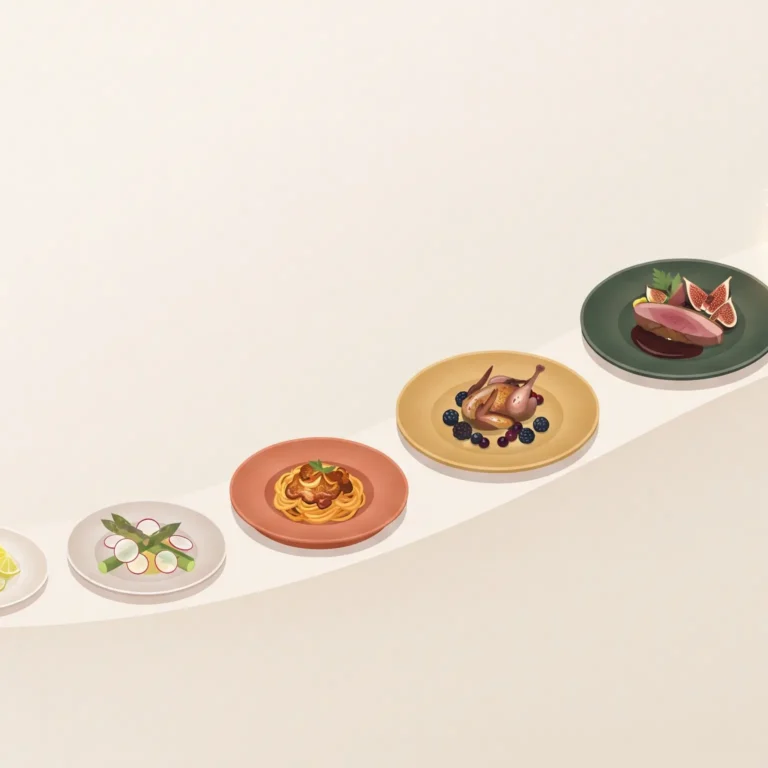
A tasting menu is storytelling told in courses — and the table setting is the first paragraph of that story. The placement of each utensil, read left to right, tells the guest what’s coming and in what order, the same way a well-sequenced menu tells a diner what to expect next. A table set with the dessert fork already visible above the plate is quietly promising something sweet is coming, long before it arrives.
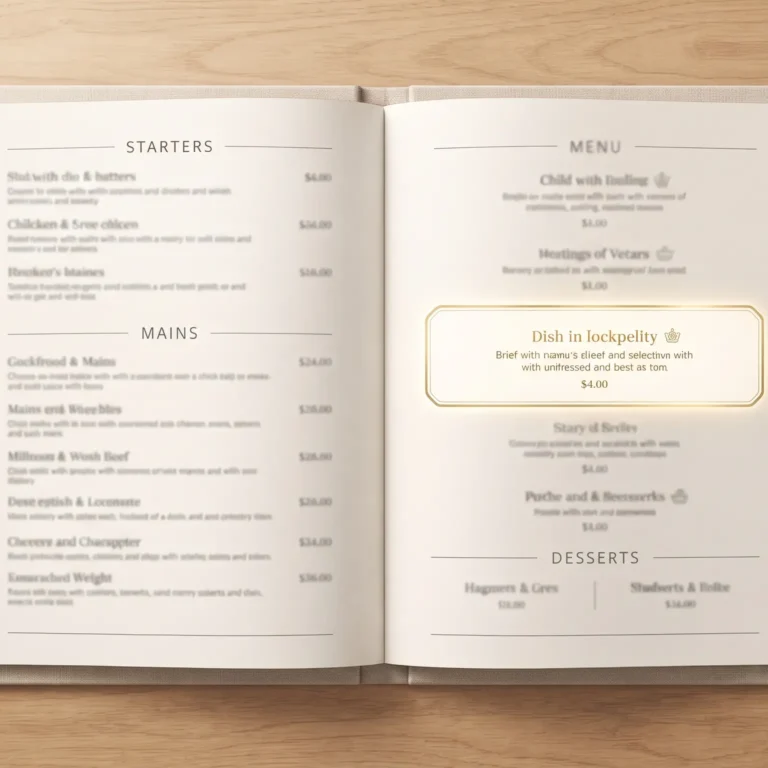
This sequencing matters at the same level of detail that a restaurant menu’s design matters — both are quiet instructions for how to move through an experience, not just lists of what’s available.
Plating and Table Setting Are the Same Discipline
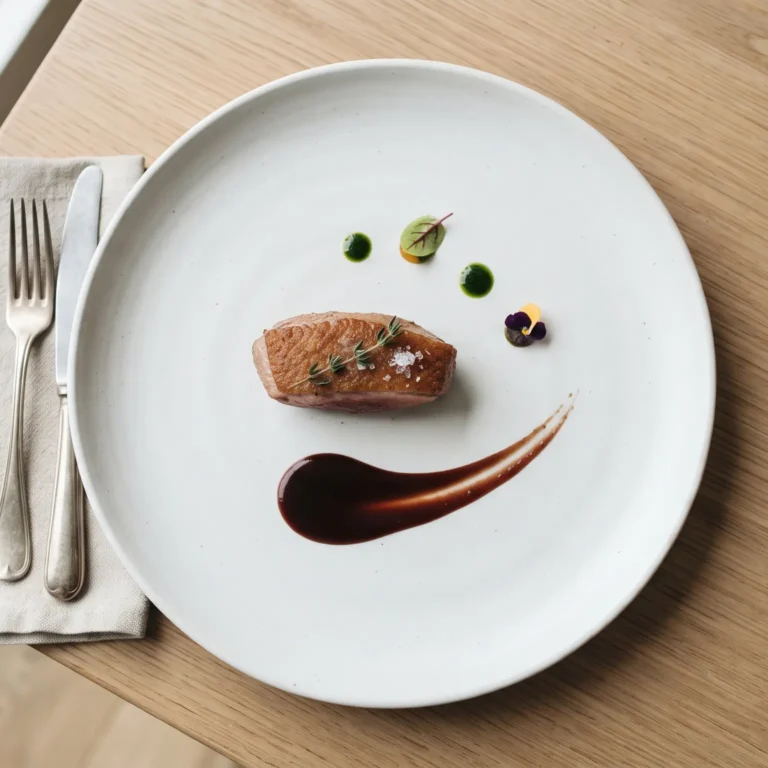
Food plating is painting with ingredients — using color, negative space, and placement to direct the eye around a plate. A table setting does the same thing at a larger scale: it directs the eye around the entire surface before a single plate is even brought out. The principles are identical — restraint, intentional asymmetry, and leaving enough visual quiet that the one deliberate flourish (a single flower, an unusual napkin fold) actually registers instead of getting lost in noise.
The Handwritten Touch
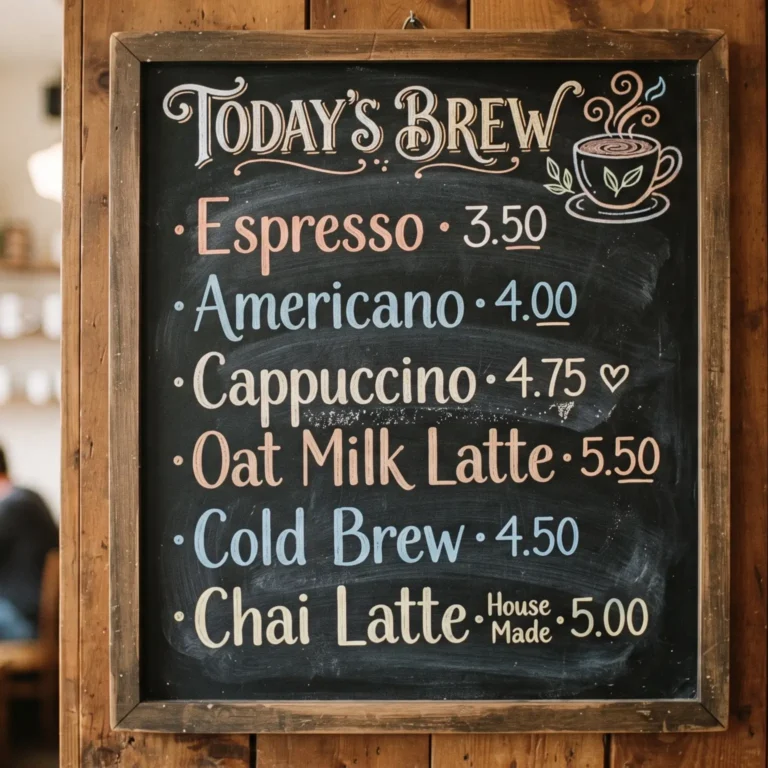
A small, imperfect detail — a hand-folded napkin, a name card written rather than printed — carries the same warmth as chalkboard handwriting in a coffee shop. It signals a human made a decision here, rather than a system defaulting to the same arrangement for everyone. This is also how a recognizable byline works in writing — small consistent choices that make an experience feel authored, not generic.
Tone Without Words
A table communicates tone the same way emojis carry tone in text — through small, wordless signals that shape how everything else is received. A single lit candle reads as intimate. Three mismatched candles read as careless. Neither requires an explanation; the guest feels the tone before they can articulate why.
Common Table-Setting Mistakes (And the Fix)
| Mistake | Why It Fails | Fix |
|---|---|---|
| Too much cutlery for the actual courses | Creates anxiety and visual clutter before the meal starts | Set only what each course requires, course by course if needed |
| No negative space between settings | Feels cramped, rushes the guest | Leave deliberate breathing room between each place setting |
| Centerpiece blocks sightlines | Interrupts conversation, defeats the point of a shared table | Keep centerpieces low or asymmetrically placed |
| Mismatched formality (casual plates, formal cutlery) | Sends conflicting signals about the occasion | Match every element to one consistent tone |
| Over-decorated with no focal point | Nothing gets noticed because everything competes | Choose one deliberate flourish, let the rest stay quiet |
Frequently Asked Questions
Why is table setting compared to composition rather than decoration?
Because every placement — spacing, sequence, and what’s deliberately left empty — shapes the guest’s experience before the meal begins, the same way a composed photograph or piece of writing shapes a viewer’s attention through structure, not just content.
Does negative space matter in table setting?
Yes. Bare space between place settings and on the table surface gives the meal room to become the focal point, rather than competing with clutter for attention.
What’s the most common table-setting mistake?
Over-setting — placing more cutlery, glassware, or decoration than the meal actually requires, which creates visual anxiety instead of calm.
How does table setting relate to the order courses are served?
The utensils placed outside-in typically mirror the order dishes will arrive, functioning as a quiet preview of the meal’s structure — similar to how a tasting menu sequences its story course by course.
Can a simple table setting still feel hospitable?
Yes — often more so. Restraint signals confidence and care, while an over-decorated table can read as compensating for uncertainty about the meal itself.