The Email Subject Line: Writing a Headline No One Asked For
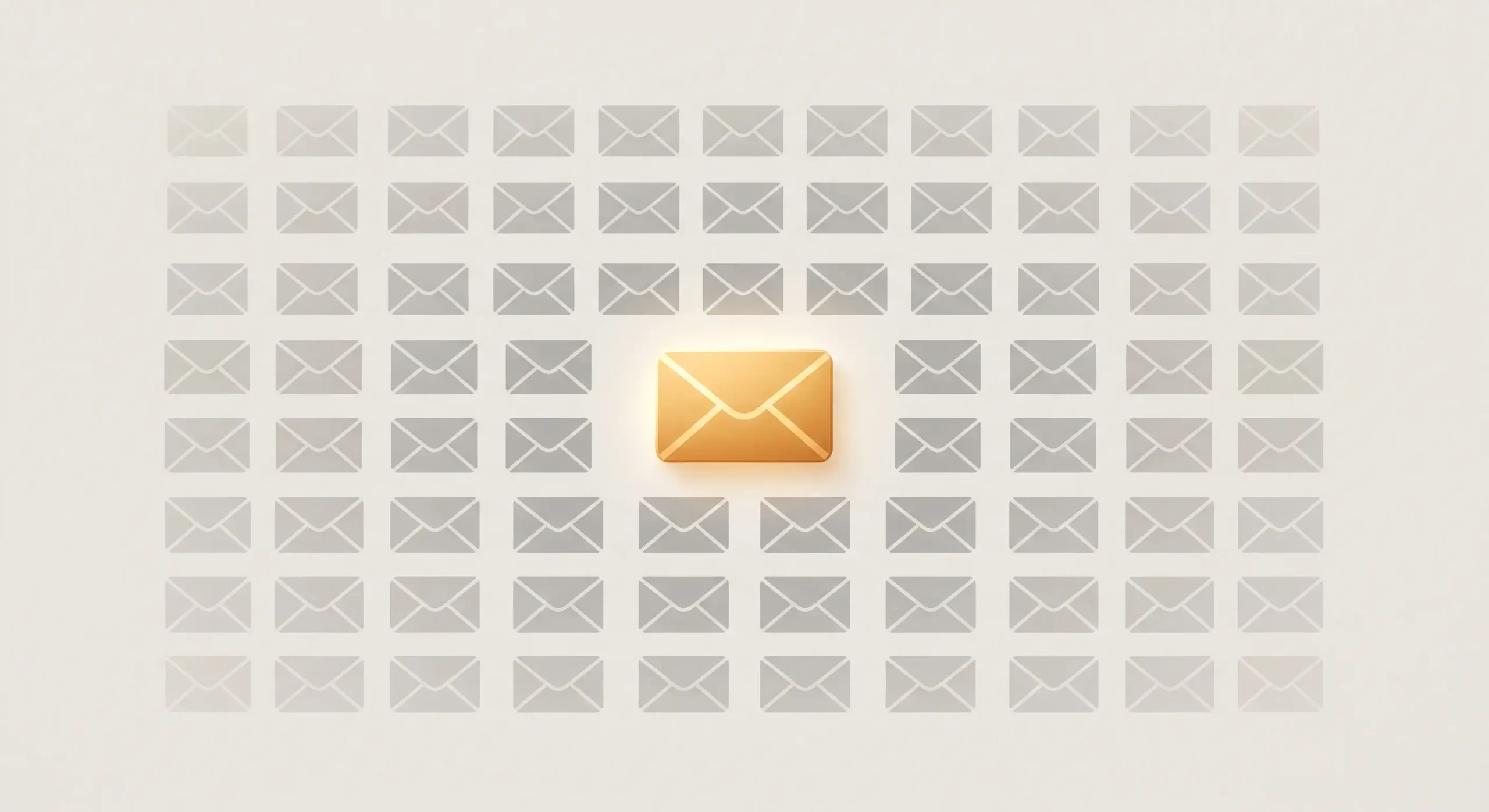
Nobody wakes up wanting to read your email. That’s the uncomfortable starting point of every subject line you’ll ever write. Unlike a news headline, which readers seek out, or a pitch deck, which an investor has already agreed to sit through, a subject line has to create its own permission to be read — in six to ten words, with zero context, competing against forty other unread messages doing the exact same thing.
This is a strange kind of writing: a headline for a story no one asked to hear, trying to earn an open it hasn’t been promised.
What Makes a Subject Line Work? (Quick Answer)
A working subject line earns attention in under a second by being specific, not clever — naming a concrete outcome, question, or stake rather than a vague tease. The best subject lines read like the first honest sentence of the email, not an advertisement for it. Specificity beats cleverness almost every time, because vague intrigue reads as spam while a precise detail reads as relevance.
Why a Subject Line Is an Act of Uninvited Persuasion
A pitch deck gets delivered to a room that already agreed to listen. A subject line gets none of that courtesy. It has to persuade someone to grant attention they weren’t planning to give — which makes it one of the few places in modern communication where you’re selling the right to be heard before you’ve said anything at all.
That’s a harder job than it looks. It also means subject lines fail for reasons that have nothing to do with the email’s actual content — the same way a handshake either builds trust or doesn’t before a single word is exchanged. The subject line is the handshake. The email body is the conversation that follows.
The Three Subject Lines That Actually Get Opened
- The specific outcome line — “Your refund was processed” beats “An update on your account” every time, because it answers the only question the reader has before they even open it.
- The open question line — A genuine question (“Still deciding on the Q3 budget?”) creates a small information gap the brain wants closed. This only works if the question is real, not manufactured curiosity bait.
- The plain-stakes line — “Deadline moved to Friday” tells the reader exactly what changed and why it matters to them, with nothing held back for the open.
What doesn’t work, reliably, is the vague tease: “You won’t believe this” or “Quick question!” These lines ask for trust they haven’t earned yet, and most inboxes read them as noise before the sender’s name even registers.
Subject Lines Are Pricing Decisions in Disguise
Every subject line is quietly making a value claim — it’s telling the reader what this email is worth in exchange for their attention. That’s the same hidden psychology behind a price tag: a number (or a line of text) signals value before the reader evaluates the thing itself. Overpromise in the subject line — “This will change everything” — and the email has to pay off that premium immediately, or the next email from you gets ignored on reputation alone.
The Subject Line Is Where You Practice Saying No (to Noise)
Writing a good subject line is mostly an act of restraint — cutting every word that doesn’t need to be there, and resisting the urge to cram in three selling points at once. That discipline is close to the craft of saying no in conversation: precision requires declining to say several true things so that the one important thing can be heard. A subject line crowded with “Important! Time-Sensitive: Your Exclusive Offer Inside” says nothing, because it tries to say everything.
Why Tone Is Nearly Impossible in a Subject Line
A subject line has no voice, no pause, no inflection — it’s pure text under enormous compression, which makes it one of the hardest places in writing to convey tone. This is the extreme version of a problem emojis try to solve in everyday messaging: without a face or voice, small word choices carry outsized emotional weight. An exclamation point in a subject line can read as enthusiasm or as desperation depending entirely on who’s reading it — there’s no delivery to soften the gap.
The Quiet Power of What You Leave Out
The best subject lines often work because of what they don’t say — they resist explaining everything up front, trusting the reader to open the email for the rest. That’s the same principle behind silence in conversation: what’s withheld can carry more weight than what’s stated. “The numbers came back” says less than “The numbers came back worse than we expected” — and yet it often gets opened faster, because it leaves a gap the reader has to resolve themselves.
A Subject Line Is Also a Business Card
In a cold email, the subject line functions the same way a business card does in a first meeting — it’s a compressed signal of who you are and whether you’re worth a few more seconds. A sloppy, generic subject line from an unfamiliar sender reads as low effort before a single sentence of the email is read. A specific, well-considered one does the opposite: it suggests the person behind it respects the reader’s time enough to not waste it.
Dignity Is a Design Choice, Even in a Subject Line
Manipulative subject lines — fake urgency, false personalization, manufactured scarcity — might get a short-term open rate bump, but they cost something harder to rebuild: trust. Writing subject lines honestly is a small instance of treating dignity as a design decision, not an afterthought. The reader on the other end is a person deciding whether your future emails deserve attention at all — and every manipulative subject line spends down that reserve a little faster.
Common Subject Line Mistakes (And the Fix)
| Mistake | Why It Fails | Fix |
|---|---|---|
| Vague teasers (“You won’t believe…”) | Reads as clickbait or spam | State the actual outcome or question plainly |
| Overpacking multiple points | Overwhelms and says nothing clearly | Cut to the single most important detail |
| Fake urgency (“Last chance!!”) | Erodes trust on repeat use | Use urgency only when genuinely true |
| Generic openers (“Quick update”) | Gives the reader no reason to open now | Name the specific update |
| All caps or excessive punctuation | Reads as desperate or spammy | Normal sentence case, minimal punctuation |
Frequently Asked Questions
What makes an email subject line effective?
Specificity. A subject line that names a concrete outcome, question, or detail outperforms a vague or clever one almost every time, because it answers the reader’s unspoken question before they open it.
How long should a subject line be?
Roughly six to ten words is the practical range — long enough to be specific, short enough to avoid truncation on mobile inboxes.
Do emojis help subject lines get opened?
Sometimes, in casual or consumer contexts, but they carry risk — a misjudged emoji can read as unprofessional or noisy depending on the audience and relationship.
Why do vague, curiosity-driven subject lines often fail?
Because most inboxes have learned to associate vague teasers with spam or low-value marketing, so they get filtered out mentally before they’re even opened.
Is a subject line really that important if the email content is good?
Yes — because the content is never read if the subject line doesn’t earn the open first. A great email behind a weak subject line functions, for most readers, as no email at all.